New Solution for Addressing Microbial Spoilage
bioMérieux contact information
bioMérieux has launched SMARTBIOME, a solution designed to help food manufacturers better understand, control, and prevent microbiological spoilage. By combining high-precision DNA sequencing, advanced bioinformatics, and bioMérieux's microbiology expertise, SMARTBIOME provides actionable insights to protect product quality, reduce waste, and protect food safety.

SCROLL
DOWN
SMARTBIOME addresses spoilage challenges through an advanced, accessible platform for in-depth spoilage investigation. The solution combines high-resolution DNA sequencing with bioinformatics and data science, an exclusive spoilage knowledge base, and bioMérieux consulting services. The solution enables food manufacturers to accurately identify spoilage organisms at every stage of production, trace issues back to their root cause using data-driven insights, and strengthen process controls. By monitoring microbiological trends over time, manufacturers can anticipate risks and proactively adjust their processes to prevent future spoilage events before they escalate.
Automated Error Correction Technology for
Traceability Data
ReposiTrak: +1 888-842-5465
ReposiTrak contact form
ReposiTrak has introduced its patent-pending system and methods for automated error detection and context-aware correction of food traceability data, addressing average data error rates of 40 percent in all traceability records. The technology addresses a critical industry problem: traceability and transactional files that technically conform to standards but contain content errors such as missing or incorrect lot codes, inaccurate product identifiers, and inconsistent shipping details. These are issues that typically require costly and time-consuming manual correction.
ReposiTrak's patent-pending system ingests heterogeneous data formats, including EDI, CSV, XLSX, XML, JSON, and API feeds, and normalizes them into a canonical data model. A hybrid engine combining deterministic expert rules and an artificial intelligence (AI)-driven inference identifies structural, semantic, and contextual anomalies. The system then generates, ranks, and applies candidate corrections using historical records and cross-document correlation, with confidence scoring to determine whether corrections are applied automatically or routed for human review. All actions are recorded with a complete audit trail to support regulatory compliance.

Defect Removal System for Potato Strips
Key Technology: +1 509-529-2161
Key Technology contact form
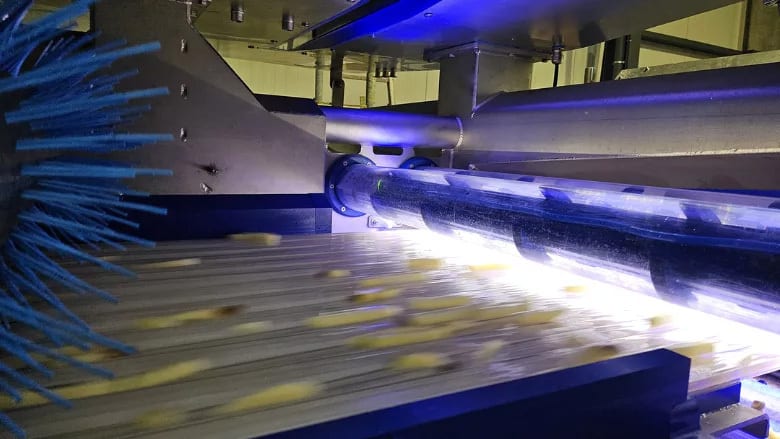
Key Technology has introduced the next-generation ADR X automatic defect removal system for potato strips, now featuring enhanced multi-spectral sensing, an updated mechanical architecture, and other additions. Building on the technology of Key's previous-generation ADR systems, ADR X aligns, singulates, inspects, and trims both peeled and peel-on wet potato strips of various cut sizes. ADR X features a series of new capabilities, including multi-channel sensing with advanced LED lighting and strobing to accurately identify challenging product defects like green discoloration. Multiple images of each strip are captured under different wavelengths and combined to create clear separation between the product and background, facilitating precise trimming decisions. A true-color user interface delivers clear visualization and intuitive operation.
Additionally, the new ADR X design maximizes hygienic operation in wet processing environments. The system architecture eliminates activity above the product stream, reduces flat surfaces, and integrates clean-in-place (CIP) functionality to protect product quality, simplify cleaning, and meet stringent sanitation requirements. ADR X also features recipe-driven conveying and alignment mechanics that automatically adjust based on the selected cut size. Lane profiles and strip positioning are set via the user interface, allowing the system to respond to different strip dimensions without manual tuning and supporting repeatable performance across product changeovers. For processors operating existing potato strip lines, ADR X can be installed as a direct replacement for previous-generation ADR 5 systems without requiring significant layout changes.
New Corolis Flowmeter Technology for Flow Measurement
KROHNE contact form
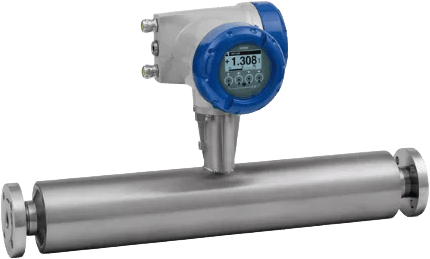
KROHNE has announced its latest Coriolis flowmeter technology for flow measurement applications, which is designed to address important process measurement challenges experienced in food processing. Coriolis flowmeters provide mass flow accuracy of approximately 0.1 percent, which is 5–10 times more accurate than competing flow measurement technologies, according to KROHNE.
Uniquely, KROHNE's Coriolis meters can be installed in any orientation without requiring specific flow profiles or straight pipe runs. Additionally, KROHNE's single straight tube design offers benefits for challenging processes that cannot accommodate bent tube solutions, as well as advantages such as low pressure drop, easy installation, and improved handling of shear-sensitive fluids.
A significant advancement in KROHNE's Coriolis technology is the proprietary Entrained Gas Management (EGM) feature. EGM allows for continued operation in two-phase flow conditions, a situation that traditionally causes Coriolis meters to cease functioning. The feature enables the meter to continue measuring repeatably without process interruption, even when accuracy may be slightly degraded from published specifications.
BlueLight Flash UVC Disinfection System
Excelitas contact form
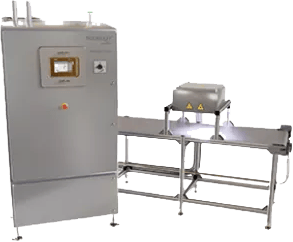
Excelitas has introduced the BlueLight Flash Small Area UVC Disinfection System, a pulsed light disinfection system engineered for food processing and packaging production environments. The system's flash control cabinet and flash lamp module are housed in robust IP69K rated washdown protocol compatible housing. The flash control cabinet features an integrated internal water chiller or an optional external air-to-water chiller to accommodate diverse process needs. Water cooling allows for high peak and average output powers.
Safety mechanisms ensure reliable performance in the cold, humid conditions common to food processing and packaging facilities. The system can be integrated above conveyor belt production lines, making it suitable for new installations as well as retrofitting to existing production lines. The BlueLight Flash Small Area UVC Disinfection System achieves greater than 4-log reductions in microbial load on a variety of common packaging and can operate at throughputs of up to 500 square meters per hour.
Product Inspection Guide for Meat, Poultry, Seafood Processors
Mettler Toledo contact form
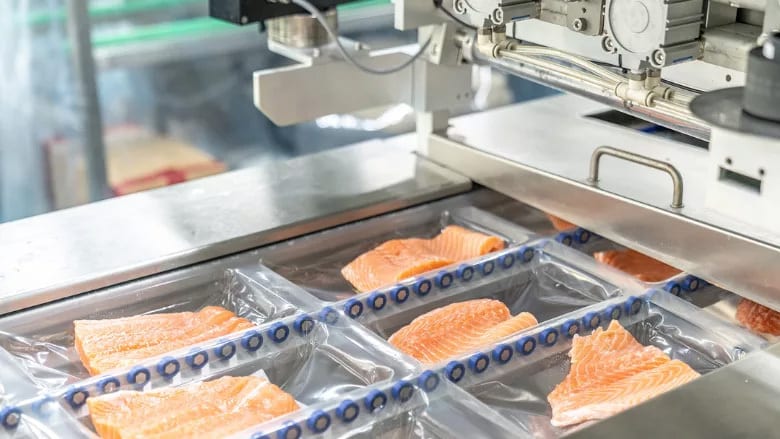
Mettler Toledo Product Inspection Group has released a new eGuide focused on product inspection and quality control for meat, poultry, and seafood manufacturers. The eGuide explores challenges specific to meat, poultry, and seafood production and outlines key quality control functions including foreign body detection, label verification, and others.
Designed for processors at all stages of operation, the guide examines how to find the best inspection solution for different applications and insertion points, with practical guidance on applying metal detection, X-ray inspection, checkweighing, and vision inspection technologies. Also highlighted is the role of inspection data in monitoring performance, documenting due diligence, and supporting continuous improvement initiatives.
New and Improved Pipeline X-Ray System
Eagle Product Inspection contact
Eagle Product Inspection recently unveiled its redesigned Pipeline X-Ray System for pumped products, offering improved machine construction and built-in inspection technologies. Pipelines uses advanced PXT photon-counting dual energy X-ray technology for bone and foreign metal detection in poultry, meat, pet food, and other pumped products, with the ability to reject items before packaging or further processing with a lower false reject rate. The system offers flexible configurations and has unique features, such as a flowmeter with variable speed functionality, test ball insertion port, and reject catch port. Additionally, users can choose from multiple detection options, including single, dual, and photon-counting PXT technologies. Pipeline's construction also withstands harsh washdown conditions and has been refined to comply with North American Meat Institute (NAMI) guidelines for hygiene and sanitation. The system also fully aligns with the meat and poultry industry's Directives, Regulations, Norms, and Standards (DRNS).

