SCROLL
DOWN
Global Foodborne Disease Burden Comparable to Malaria, Per Updated WHO Estimates
Image credit: Dr_Microbe/iStock / Getty Images Plus via Getty Images

In June, the World Health Organization (WHO) released its updated global burden of foodborne disease estimates, which suggest that 42 hazards cause approximately 866 million illnesses and 1.52 million deaths annually. According to WHO, this burden of foodborne disease is similar to that from tuberculosis, HIV and AIDS, or malaria.
The agency estimated that contaminated food was also responsible for the loss of roughly 1.57 million disability-adjusted life years (DALYs), which is a measure combining years of life lost due to premature death and years lived with disability. The previous edition of the estimates, which was also the first time these estimates were produced, was published in 2015 and considered 31 hazards.
The 2026 estimates also reveal national and regional differences in foodborne disease trends, as well as offer economic burden estimates to understand the costs of unsafe food. Specifically, chemical foodborne hazards were estimated to cause 6.26 million illnesses, while microbiological hazards causing diarrheal illness were attributed to approximately 666 million illnesses, and invasive enteric and parasitic disease hazards caused an estimated 1.94 million illnesses.
Positively, the burden of foodborne diseases has been trending down since 2000, but children under five remain disproportionately affected. Although they represent only a small percentage of the global population, young children account for approximately one-third of foodborne disease deaths and a substantial share of the total disease burden. Diarrheal diseases caused by pathogens such as norovirus, Campylobacter, non-typhoidal Salmonella, and E. coli continued to account for a large proportion of illnesses, along with toxic heavy metals like arsenic and lead.
WHO noted that the greatest burden remains concentrated in low- and middle-income countries, particularly in Africa and Southeast Asia, where limited access to clean water, sanitation, healthcare, surveillance, and food safety infrastructure contributes to elevated risks
Researchers from the U.S. Centers for Disease Control and Prevention (CDC), the U.S. Food and Drug Administration (FDA), and the U.S. Department of Agriculture's Food Safety and Inspection Service (USDA-FSIS) have presented a framework for identifying and investigating bacterial strains that cause foodborne illnesses over extended periods of time, rather than through isolated outbreaks, with the goal of improving prevention strategies and reducing the overall burden of foodborne disease.
Under the framework, REP strains are categorized based on the pattern of illnesses they cause. Reoccurring strains are associated with periodic outbreaks over time, emerging strains show increasing incidence, and persisting strains consistently cause illnesses over extended periods. Acute outbreaks account for less than 10 percent of illnesses reported to CDC's PulseNet network. As a result, most foodborne illnesses are not linked to a known source, limiting opportunities for intervention.
However, advances in whole genome sequencing (WGS) have made it possible to identify genetically related bacterial strains that cause illnesses over much longer periods than traditional outbreaks. These technologies have improved the ability to link illnesses to common food, animal, environmental, or waterborne sources and to track pathogen movement across different reservoirs.
The study highlighted several examples in which interventions targeting animal or environmental reservoirs were followed by substantial declines in human illnesses, suggesting that identifying and monitoring REP strains may help prevent illnesses before they occur. For example, Salmonella Reading REPJLG01 declined after interventions were applied in turkey production, and agricultural water and land use changes resulted in fewer Shiga toxin-producing E. coli REPEXH02 illnesses.
The researchers also emphasized the need for new surveillance and investigation approaches. Existing outbreak detection methods may miss REP strains that occur below standard cluster detection thresholds or exhibit greater genetic diversity than traditional outbreaks. The authors suggested that new detection algorithms capable of analyzing large genomic datasets could improve identification of previously unrecognized REP strains.

CDC, FDA, USDA Collaboration Defines Framework for Classifying REP Strains
USDA-FSIS Announces Pilot Program to Evaluate Salmonella Control Strategies in Raw Poultry Establishments
Image credit: Dr_Microbe/iStock / Getty Images Plus via Getty Images

USDA-FSIS has announced a pilot project for raw poultry establishments to evaluate new approaches for monitoring and controlling Salmonella during slaughter and processing. The pilot is open to chicken and turkey slaughter and processing establishments that are subject to one or more existing Salmonella performance standards for carcasses, parts, or comminuted products. To participate, establishments must either incorporate Salmonella biomapping into their food safety system or include a validated Critical Control Point (CCP) for Salmonella control in their Hazard Analysis and Critical Control Points (HACCP) plan.
As part of the pilot, FSIS plans to evaluate a shortened moving window for Salmonella performance standards. Instead of the current 52-week moving window, participating establishments would be evaluated using a variable moving window beginning at 13 weeks, with a maximum of 52 weeks.
Establishments participating through the biomapping option must submit a sampling plan identifying locations throughout the facility where Salmonella samples will be collected and enumerated. After approval, FSIS inspection program personnel (IPP) will routinely verify biomapping data collection. Establishments choosing the CCP option must submit information describing the validated Salmonella intervention included in their HACCP plan. Facilities that already conduct biomapping or have implemented a validated CCP are also eligible to participate.
A series of tabletop exercises held by FDA revealed industry's progress and challenges in meeting the requirements of the Food Traceability Final Rule, also known as Section 204(d) of the Food Safety Modernization Act (FSMA 204). The current compliance date for the Food Traceability Rule is July 20, 2028. It was delayed by 30 months from its original compliance date (January 2026) to "afford covered entities the additional time necessary to ensure complete coordination across the supply chain in order to fully implement the final rule's requirements."
The exercises were held between March 9 and April 1, 2026, with voluntary participation from 15 companies spanning the supply chain, including processors, distributors, retail food establishments, and restaurants. According to FDA, the exercises demonstrated that meaningful progress is being made toward meeting the Food Traceability Rule requirements.
Most firms responded within 24 hours, and, more than any one technology, proactive supply chain coordination drove the strongest results. More specifically, participants used a wide range of tools—from traditional business records (e.g., invoices, purchase orders, bills of lading, and advance shipment notices) to Warehouse Management Systems, Enterprise Resource Planning, RFID tags, and GS1 barcodes. Larger firms tended to use more advanced data carriers (like RFID or 2D barcodes), but the technology itself was less determinative of success than whether supply chain partners had agreed on what data to collect, maintain, and share—and how. Even smaller and mid-sized firms had access to most of the required data through traditional business records.
The exercises also revealed challenges and gaps that remain to be resolved. For example, despite "encouraging" Traceability Lot Code (TLC) and TLC source availability, only 40 percent of participants' records captured the properly assigned TLC across each Critical Tracking Event (CTE) they performed, and 27 percent of participants' records captured the complete TLC source for each CTE they performed. Moreover, participants showed uneven readiness for sharing TLC and TLC source information together, with some firms demonstrating the ability to capture and share one element but not the other.
The findings from the tabletop exercises will be used to inform future FDA outreach, education, and technical assistance efforts. FDA's full report on the tabletop exercises can be accessed here.

FDA Traceability Rule Readiness Exercises Reveal Supply Chain Coordination Matters More than Technology
In October 2024, California signed into law first-of-its-kind legislation standardizing "Best By" dates and prohibiting the use of "Sell By" dates on food labels, marking the country's first mandatory food date labeling reforms. On July 1, 2026, that law (AB 660) took effect.
Companies selling packaged foods in California must include food safety dates (i.e., when the item should be consumed or frozen to ensure the product is safe to eat) and quality dates (i.e., when the food's organoleptic properties may begin to deteriorate) on product labels using only the following terminology:
- "Best If Used By" or "Best if Used Frozen By" to indicate the date by which a product will reach its peak quality. For smaller packages, the abbreviation "BB" may be used.
- "Use By" or "Use By or Freeze By" to indicate the date by which a product's safety can no longer be guaranteed. For smaller packages, the abbreviation "UB" may be used.
Importantly, the use of consumer-facing "Sell By" dates will be prohibited to reduce the chances of consumers confusing "Sell By" dates with quality or safety dates. The use of any other ambiguous and inconsistent phrases like "Expires On" and "Freshest By" is also now prohibited. Additionally, AB 660 authorizes grocers to display "Packed On" labels on prepared food items, but they must also display the mandatory "Use By" or "Best If Used By" dates described in the legislation.
Also retained in the bill is the requirement limiting refrigerated shelf life to no more than 30 calendar days from packaging to consumption, except the time the product is maintained frozen, or the original safety date—whichever occurs first.

California Law Standardizing 'Best By' Dates Now in Effect: What Packaged Food Manufacturers Need to Know
In late 2025, babies who were fed organic ByHeart Whole Nutrition infant formula began to fall ill with botulism across the U.S. Less than one year later, in June 2026, a new infant botulism outbreak emerged across several states, this time involving Nara Organics Whole Milk Infant Formula. Both outbreaks were first flagged by the California Department of Public Health's Infant Botulism Treatment and Prevention Program (CDPH's IBTPP), which operates the only source of infant botulism treatment worldwide, BabyBIG.
In the ByHeart outbreak alone, 48 infants were sickened in 17 states. The earliest illness was December 2023, but the majority of cases occurred between March and November 2025. As of the time of publication, four infants in three states have fallen ill as part of the Nara Organics outbreak between April and May 2026.
Until now, Clostridium botulinum has not been considered to be a hazard reasonably likely to occur in powdered infant formula manufacturing. But with two high-profile outbreaks of infant botulism linked to seemingly similar products—whole milk powder-based formulas marketed as using organic, "clean" ingredients, sold under smaller, privately owned brands—one might begin to wonder whether these incidents are due to industrywide blind spots, or perhaps could have been prevented through stronger regulatory oversight.
Although sporadic cases of infant botulism are known to occur due to a number of causes, the ByHeart outbreak brought the issue of C. botulism contamination in powdered infant formula into the spotlight. The new Nara outbreak further underlines the importance of reconsidering C. botulinum as a hazard in formula production processes. Read more about the questions raised by the outbreaks here.

Organic Infant Formulas Cause Back-to-Back Botulism Outbreaks
A new European Commission report examining the implementation of food safety culture (FSC) requirements found that EU Member States have made uneven progress since food safety culture became a legal requirement for food business operators under EU regulations in 2021.
Based on a 2025 survey of all 27 Member States, the report showed that 18 countries are conducting official controls for food safety culture, although many integrate those assessments into existing inspections of Hazard Analysis and Critical Control Points (HACCP) systems or broader food safety management systems rather than conducting standalone evaluations.
Common noncompliances identified during inspections included inadequate employee training, failure to systematically implement food safety culture practices, and deficiencies related to hygiene and traceability requirements. Some competent authorities also use inspection findings, and in limited cases third-party audit results, to evaluate the effectiveness of food safety culture implementation at individual establishments.
The survey also revealed significant implementation challenges. Twenty-two of the 27 Member States reported difficulties conducting food safety culture official controls, citing limited resources, the need to revise inspection procedures, and the lack of objective, standardized criteria for assessing organizational culture. Because food safety culture involves leadership, communication, employee behavior, and organizational values, regulators reported that evaluating compliance consistently remains more difficult than assessing traditional technical food safety requirements.
Despite these challenges, the report highlighted several national initiatives aimed at improving implementation. Ireland has incorporated food safety culture assessments into routine official controls, Belgium has launched a pilot program to develop a practical methodology for culture inspections, and Spain and the Netherlands have introduced self-assessment tools for food businesses. Additionally, several Member States are collaborating through a Heads of Food Safety Agencies working group to develop a shared toolbox that could help harmonize food safety culture assessments across the EU.
The European Commission concluded that while official oversight of food safety culture has expanded substantially since the regulations took effect, further work is needed to develop consistent assessment methods and support regulators in implementing the requirements effectively.

EU Member States Report Challenges in Implementing Food Safety Culture Official Controls

David Haaf, former president and CEO of the International Dairy Deli Bakery Association, has been named Vice President of Fresh Foods at FMI—The Food Industry Association.

HAAF
Donna Garren, Ph.D. has been appointed the Director of the Office of Produce Safety within the U.S. Food and Drug Administration's Human Foods Program's Office of Microbiological Food Safety.
DFA of California and Safe Food Alliance have promoted Hillari Bynum to Senior Director of Growth and Innovation.

BYNUM
Ruiz Food Products Inc. has appointed Jared Vitemb as Senior Vice President, General Counsel.
BGG Group has named Bharadhwaj "Bharat" Ramamoorthy as the new CEO of BGG Europe and Head of the International Division.

RAMAMOORTHY
FreshEdge has appointed Wes Saber as Chief Financial Officer.

SABER
Peak Technologies has appointed Joachim (Joe) Heel as CEO.

HEEL
Elopak has appointed Håkon Volldal as CEO.

VOLLDAL
The Grote Company Family of Brands has appointed Ryan Croskey as Chief Financial Officer.

CROSKEY
Lane Magness was appointed President of Robroy Industries' Raceway Division.

MAGNESS
Food Safety Magazine is saddened to announce the passing of Dr. Frank Busta on January 24, 2026. An internationally recognized food safety expert, Dr. Busta received the magazine's Distinguished Service Award in 2021 for his outstanding service to food safety science. Read more about his contributions to food safety here.

FDA Announces FSMA 204 Compliance Training Through FSPCA
The U.S. Food and Drug Administration (FDA), in partnership with the Food Safety Preventive Controls Alliance (FSPCA), has launched a new training curriculum on the Food Traceability Rule, also known as Section 204(d) of the Food Safety Modernization Act (FSMA 204). The course, titled "FSPCA FTR Training for the Food Industry," is a core, industry-oriented training that provides participants with the foundational knowledge needed to understand and comply with the Food Traceability Rule. Registration for participants is now available on the FSPCA website, along with information for prospective Lead Instructor candidates.

Fresh Produce Collective of Regional Companies Launches Under TruSource Name
TruSource has officially launched as a fresh produce collective that brings together regional operating companies under a shared platform while preserving their local identities and customer relationships. Founded in early 2025, the collective includes Freshway Foods, Forestwood, and Nickey Gregory, representing more than 100 combined years of industry experience, serving more than 4,000 customers, and operating a distribution network across 26 states east of the Mississippi River.
Under the TruSource model, each operating company retains its existing brand, leadership, and local presence while gaining access to shared resources, expanded sourcing capabilities, operational support, technology, food safety expertise, processing capabilities, and distribution infrastructure. The approach is intended to strengthen supply chain resilience and help regional produce distributors compete more effectively in an increasingly complex marketplace. TruSource also plans to expand by adding regional operating companies that align with its customer-focused service model.

Kwik Trip Receives IAFP's 2026 Black Pearl Award

The International Association for Food Protection (IAFP) selected Kwik Trip Inc. as the 2026 recipient of the Black Pearl Award, which is given annually to one company for its efforts in advancing food safety and quality through consumer programs, employee relations, educational activities, adherence to standards, and support of the goals and objectives of IAFP.
Kwik Trip Inc. is a family-owned company founded in 1965 in La Crosse, Wisconsin. The company operates 925 retail convenience stores across the Midwest, serving more than 12 million customers each week. Over the past two decades, Kwik Trip Inc. has expanded foodservice through a vertically integrated business model that includes company-owned production facilities, distribution centers, transportation, retail operations, and an A2LA®-accredited Food Protection Laboratory. The majority of food and beverage products offered in its stores are produced and supplied daily by Kwik Trip Inc., providing direct oversight of food protection and quality standards, traceability, and active managerial control.
NOW, LeafWorks Advance Identity Verification Testing for Botanical Ingredients

NOW Foods and LeafWorks have expanded their partnership to advance botanical ingredient identity verification through DNA testing, helping strengthen quality assurance and reduce the risk of economically motivated adulteration in herbal supplements. Under the collaboration, NOW has adopted LeafWorks' DNA-based authentication technology to verify the identity of botanical raw materials, complementing traditional analytical methods used to assess ingredient quality and authenticity.
According to the companies, DNA testing provides an additional layer of verification for botanicals that may be difficult to identify using conventional chemical analyses alone, particularly after processing. The partnership is intended to improve confidence in ingredient sourcing and support manufacturers' quality control programs by helping ensure that botanical ingredients match their labeled identity before they enter finished products.
Parts Town Bolsters Service to Foodservice Industry with Acquisition of 86 Repairs

Parts Town Unlimited has acquired 86 Repairs, a provider of equipment repair and maintenance management technology for the foodservice industry, expanding its service capabilities for restaurants, commercial kitchens, and other foodservice operators. The acquisition integrates 86 Repairs' digital platform, which automates repair dispatching, tracks maintenance activity, and provides equipment performance insights, with Parts Town's extensive network of original equipment manufacturer (OEM) parts, service providers, and technical support.
The acquisition is intended to streamline equipment maintenance, reduce downtime, improve operational efficiency, and provide customers with a more connected approach to managing foodservice equipment throughout its lifecycle.
RESOURCES
GS1 US has published new guidance to help foodservice and food retail companies comply with the growing number of state extended producer responsibility (EPR) laws governing packaging and paper products. The resource explains how standardized product identification and data-sharing can help businesses meet reporting obligations, manage packaging data, and navigate varying EPR requirements across jurisdictions.
The guidance highlights the use of Global Trade Item Numbers (GTINs) and Global Data Synchronization Network (GDSN) standards to improve the accuracy and consistency of packaging information exchanged between trading partners. According to GS1 US, standardized data can reduce manual reporting, improve supply chain transparency, and simplify compliance as additional states adopt EPR regulations. Developed in collaboration with industry stakeholders, the guidance is intended to help manufacturers, distributors, retailers, and foodservice operators build more efficient data management processes while preparing for evolving packaging sustainability and regulatory requirements.
Download the guidance here.
New GS1 US Guidance Helps Retail Foodservice Companies Meet EPR Requirements
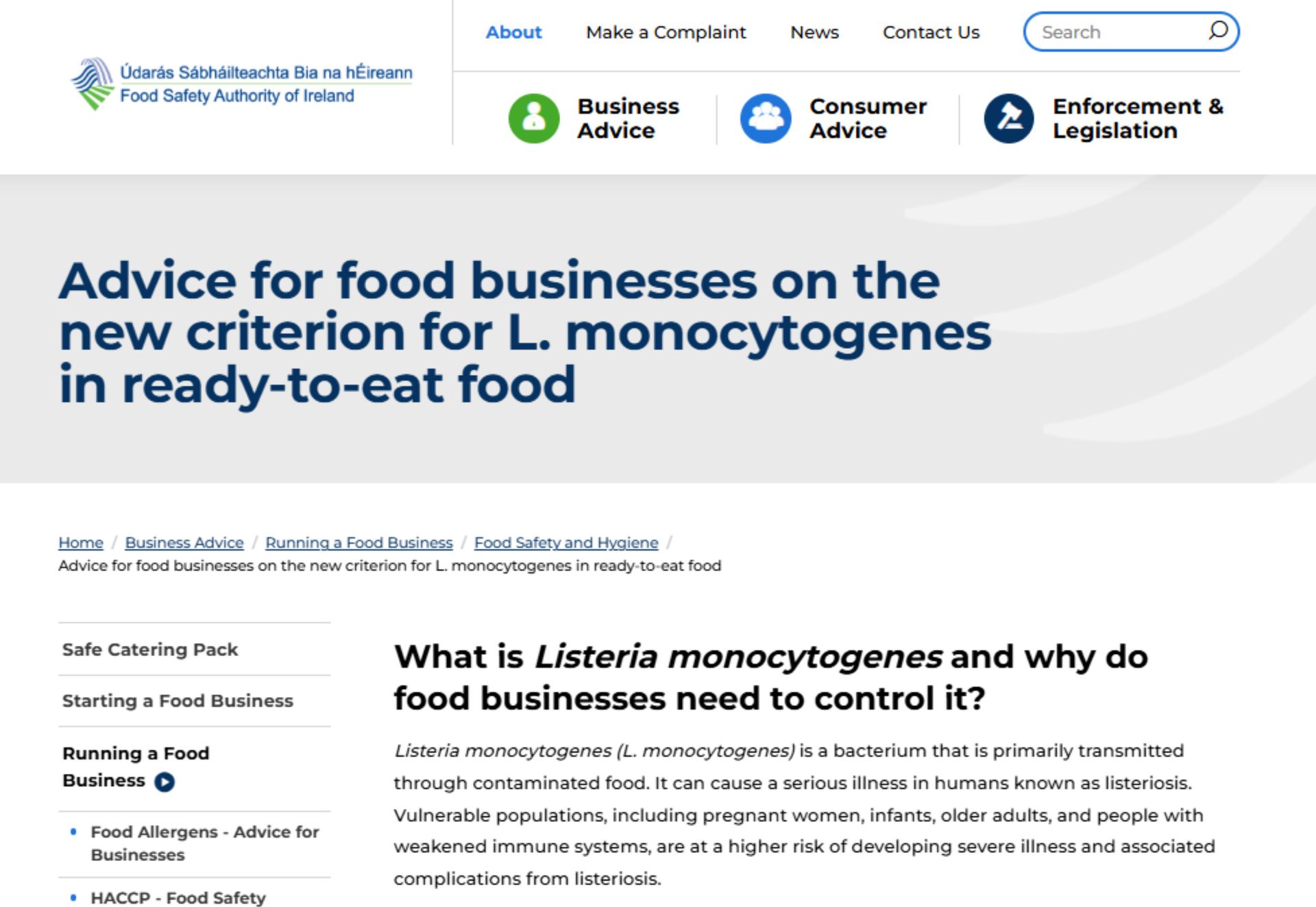
In 2024, the European Commission amended Regulation (EU) 2073/2005 on the microbiological criteria for foods to expand the requirements for food business operators (FBOs) regarding Listeria monocytogenes in ready-to-eat (RTE) foods, which are now in effect as of July 1, 2026. The amended regulation extends the responsibility for ensuring that RTE foods placed on the market will not support the growth of L. monocytogenes above 100 colony forming units (CFU/g) throughout their shelf life from just the original food manufacturer to FBOs across the supply chain.
To help food businesses comply with the new regulations, the Food Safety Authority of Ireland (FSAI) has issued new guidance. Generally, FSAI recommends that FBOs at all points along the supply chain:
- Implement prerequisite programs (i.e., good hygiene practices that are the basic conditions and activities necessary to maintain a hygienic environment)
- Implement Hazards Analysis and Critical Control Points (HACCP)-based food safety management systems
- Test against microbiological criteria, as appropriate, when validating and verifying the correct functioning of the HACCP-based procedures and other hygiene control measures
- Implement a robust environmental monitoring program for Listeria.
Access the FSAI guidance here.
Ireland Offers Compliance Guidance for Stricter EU Regulations on Listeria in RTE Foods
SSAFE has published a knowledge paper, "The Future of Food Safety," offering a pragmatic, integrated, risk-based future approach to food safety to support global trade, food security, and sustainability. The paper was developed in partnership with Markus Lipp, Ph.D., Senior Food Safety Officer at the Food and Agriculture Organization of the United Nations (FAO) and was written by Steve Wearne, former Chair of the Codex Alimentarius Commission.
The paper suggests that the binary, compliance-based approach to food safety polarizes food as "safe" or "unsafe," and advocates instead for a more holistic framework. It recommends that, through cross-sector collaboration, attention should be given to the broader implications of the consumption of foods that are noncompliant with food safety standards, where the highly conservative safety margins inherent in normative risk assessment processes are eroded, but where there are also important gains in terms of food security and the sustainability of food systems.
By integrating considerations across food safety, security, and sustainability when setting regulatory policy and implementing specific risk management measures, significant gains can be made to future-proof the global food system.
Download the paper here.
SSAFE Advocates for Future-Proofing Food System Through Holistic, Risk-Based Approach