BACK TO BASICS
By Richard F. Stier, M.S., Consulting Food Scientist
Safe Chemical Handling and Storage
Every food processing facility must properly develop, document, implement, and maintain a chemical program
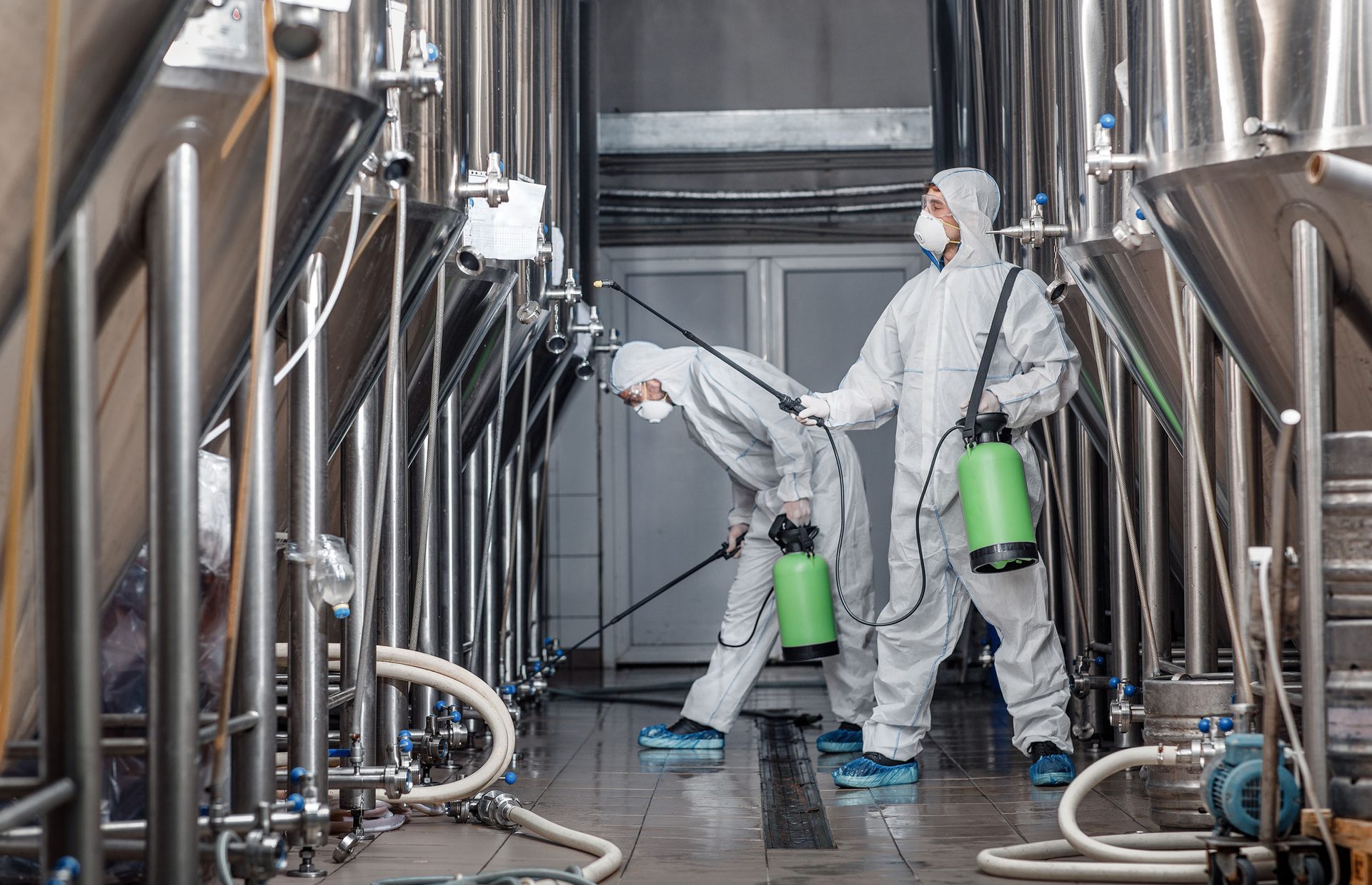
Image credit: Prostock-Studio/iStock/Getty Images Plus via Getty Images
SCROLL DOWN
Food processors utilize a plethora of chemicals in their operations. These chemicals include ingredients, cleaners, sanitizers, lubricants, gases, specialty materials, hand hygiene products, and others. Each one of these materials must be properly received, stored, utilized, and disposed of. In addition, procedures should address potential crises such as leaks, spills, or catastrophes like explosions.
A recent article on crisis management1 discussed how and why food processors must be proactive in their thinking. Companies must develop, document, implement, and maintain procedures to ensure that they are prepared for a crisis. This includes ensuring that the workers who handle chemical materials are protected. Failure to follow documented protocols can be dangerous to workers and damaging to the company. The following story was used to demonstrate the importance of these procedures during a sanitation workshop session conducted by a chemical sales representative:
The chemical supplier was asked to testify in a case where a member of a cleanup crew almost lost his sight when he got caustic cleaner in his eyes. He was not wearing the proper personal protective equipment (PPE)—that is, no eye protection. Yet, his colleagues testified that he had attended a safe chemical handling session that specifically addressed that particular chemical and the required PPE. However, there was no proof that he attended since he failed to sign the attendance sheet. The company was, therefore, deemed to not only be liable for his injuries but also negligent for failing to train the person. This underscores the importance of training and the need to properly document session attendance by employees.
So, how does an operation develop, document, implement, and maintain a program to properly manage the many chemicals that are used in a food processing operation? The procedure must include a purpose statement that might read as follows:
To establish procedures to ensure that all chemicals, including but not limited to cleaners, sanitizers, hand hygiene solutions, food chemicals, gases, and lubricants, are properly stored, handled, and maintained to ensure that food, ingredients, and food contact surfaces and equipment are protected. The established procedures also ensure worker safety and apply to all persons handling any chemical.
The protocol must address purchasing. Firstly, chemicals must be purchased from approved suppliers only. Each purchase shall include a certificate of analysis (COA). The supplier shall be required to provide the buyer with safety data sheets (SDSs) and safe handling instructions for each chemical that is purchased. Sadly, most chemical suppliers avoid providing training to their clients on proper handling due to potential liability concerns. The SDSs should be provided in multiple languages, if needed, although some operations mandate that all employees must speak English to ensure overall safety. Apparently, this may be done because of the safety issue and is not deemed discriminatory. Maintaining an updated list and SDSs of all chemicals used in a plant can be a challenge. SDSs for almost all chemicals used in a food plant are now accessible through the internet2 or by using a toll-free number.
One challenge to the program is that staff, especially maintenance personnel, occasionally need to pick up something from the local hardware store and do not collect the SDS. This means that when an auditor visits the facility, they may find a chemical without an SDS. A program to prevent unauthorized purchases should be developed and implemented.
Chemical Handling and Storage Procedures
After chemicals are delivered to the plant, they must be properly handled and stored. The key words are awareness and containment. The documented procedure for handling and storage may read as follows:
- All chemicals and lubricants shall be stored in locked and properly labeled facilities. These facilities should be properly ventilated. In addition, some chemicals must be properly secured by chaining to the walls (gas tanks, for example).
- The facilities shall be clearly marked with signage that states, "Authorized Personnel Only" and that hazardous materials are stored in this location. The appropriate, internationally recognized signs for chemical hazards shall be posted.
- A complete list of all chemicals stored in the facility shall be posted or easily accessible on the company intranet. If the list is maintained as a hard copy, it shall be laminated and updated regularly, as evidenced by a date stamp.
- SDSs for all chemicals stored in the facility shall be kept in the facility at a location that is easily accessible for the workforce. The location of the SDSs shall be included in the employee orientation and in regular refresher sessions. The SDSs shall be updated as needed and must match the list noted in point #3.
- The personal protective equipment (PPE) required for handling chemicals shall be stored with the chemicals or stored in a location where they are easily accessible to users. Equipment shall include, but need not be limited to: eye protection, gloves, aprons, and boots. Breathing gear may be necessary. Equipment shall be inspected regularly to ensure that it remains in good condition. Records of these inspections shall be maintained.
- If necessary, chemicals shall be stored on containment pallets or other devices designed to contain spills. Some operations install a curb around the chemical storage areas. Explosive chemicals must be stored in an explosion-proof cabinet.
- Chemicals must be stored with only compatible materials. This facility shall work directly with their chemical suppliers to ensure that chemical storage is safe and properly maintained.
- All chemicals must be properly labeled. Buckets, pails, or other utensils used to transport chemicals or used for cleaning shall be labeled with the chemicals used in those containers. This is essential to ensure that incompatible materials are not inadvertently mixed.
- Eyewash stations shall be installed in the immediate vicinity of all chemical storage locations and where chemicals are used. Eyewash station performance shall be routinely checked to ensure that they are working properly. Records of these inspections shall be maintained
- No chemicals used for pest management shall be stored onsite. These include insect sprays, rodent bait blocks, or any other compound used to kill or attract pests. Pesticides shall be handled by contractors hired to manage the pest control program only. The contractor shall bring materials onsite as needed, dispose of wastes, and shall not be allowed to store materials on the grounds.
“The operations manager shall maintain a master file of safety data sheets for all chemicals, lubricants, and other materials used in operations.”

Lubricants Handling and Storage
Most food plants use lubricants of some kind—both food grade and non-food grade.
Lubricants shall be stored in a locked facility with appropriate signage. Food-grade and non-food-grade lubricants shall be stored in separate facilities. They shall also be clearly identified. As an example, labels or color coding should be employed.
Only food-grade lubricants shall be used in process operations where the lubricants may come into contact with food. Workers handling lubricants must be trained, and the training session(s) must be documented.
Safety Data Sheets Master File
The need for SDSs has already been mentioned. Additional details are provided below:
- The operations manager shall maintain a master file of SDSs for all chemicals, lubricants, and other materials used in operations. The master file shall have a register in front that summarizes all chemicals. This file shall be date-stamped to indicate that the list has been updated.
- The master file shall be maintained in the operation manager's office. Satellite files shall be maintained in chemical storage areas. A master file shall also be maintained in an area that is easily accessible to all (such as an employee lunch or break room).
- Abbreviated SDS lists shall be maintained in all chemical storage facilities.
- The operations manager shall provide the local clinic with a complete set of all SDSs.
- The SDS master file shall be used to conduct a yearly audit of all process operations, warehouse facilities, and elsewhere to ensure that only approved chemicals are being used in operations. If any other materials are found, they shall be added to the SDS master file or taken out of service.
- The master file shall also include any chemicals taken out of service, so there is a permanent record of what materials have been used in the facility. These records shall be kept in a separate section of the master file.
We have already mentioned the importance of making sure that all persons who handle and use chemicals be educated on their use, and that records of training be maintained. All other plant workers should also be trained in safe chemical handling, and records of these sessions must be maintained in their personnel files. The general protocol for chemical handling may read as follows:
- All persons handling chemicals shall be trained in the use of those materials. This includes handling and use of the chemicals and proper use of PPE. This training shall be documented.
- Persons taking this training must sign and date the training sheets to verify that they received the training and that they understood what was covered.
- Training shall be conducted by competent individuals. The chemical supplier would be considered a competent individual if they agree to offer training.
- The facility must prepare Standard Operating Procedures (SOPs) for all operations using chemicals, such as cleaning and sanitizing. Persons conducting these operations shall be trained on the procedures. This training shall be documented.
Another element that must be included in the program is proper disposal of chemicals. Procedures should also be developed to address spills. Also, operations shall not dispose of old or waste chemicals. Old or waste chemicals shall be disposed of by generating a work order to the physical plant. Plant personnel will respond to the work order and provide operations with proper documentation that the chemicals in question have been properly eliminated. The SDSs and other documents provided by the supplier describe how materials shall be properly disposed of.
Maintenance of Chemical Program
The last element of the quartet involved in developing procedures is maintenance. This includes verifying that the chemical handling and storage program is operating as designed. This responsibility is generally assigned to operations.
The operations manager and/or supervisors shall develop, document, and implement a regular inspection program to ensure that chemicals are properly stored and maintained and that PPE is not only available, but also in good condition. Records of these inspections shall be maintained. If deficiencies are observed, then corrective actions must be implemented. Records of the corrective actions (including effectiveness) shall be maintained.
At least once a year, a verification audit of all SDS binders or the intranet register, as well as all chemicals being used in operations, shall be conducted. If any chemicals are found that are not in the SDS register, then the binder and register shall be immediately updated.
An internal audit shall be conducted of the entire chemical handling program at least once a year. This shall be an independent audit—i.e., conducted by someone not involved in the program.
Takeaway
This article has presented a general program to develop a safe chemical handling and storage program. Other elements may be included depending upon the chemicals being employed. As an example, a company using ammonia as a refrigerant should install sensors to detect leaks. In the event of a leak, these sensors will alert staff, triggering an evacuation.
The chemical program must be properly developed, documented, implemented, and maintained. Implementation must include documented training for all persons handling and using chemicals and a general session for all others. The goal is proper and safe use of each and every chemical employed in the facility—i.e., awareness and containment.
References
- Stier, Richard F. "Crisis Management: Are You Ready?" Food Safety Magazine. July 15, 2025. https://www.food-safety.com/articles/10530-crisis-management-are-you-ready.
- 3E SDS. "Free SDS Search: 10+ Million Safety Data Sheets." https://www.msds.com/.
Richard F. Stier, M.S. is a consulting food scientist who has helped food processors develop safety, quality and sanitation programs. He believes in emphasizing the importance of how these programs can help companies increase profits. Stier holds degrees in food science from Rutgers University and the University of California at Davis. He is also a member of the Editorial Advisory Board of Food Safety Magazine.