CYBERSECURITY AND FOOD DEFENSE
By Cristopher A. Young, COL, USA (Ret.), D.V.M., M.P.H., Diplomate A.C.V.P.M., Professor of Practice, College of Veterinary Medicine, Auburn University and Adjunct Professor, College of Veterinary Medicine, Department of Pathology, University of Georgia; David E. Bragg, M.S.A.E., Adjunct Instructor, Department of Political Science, Auburn University; and Robert A. Norton, Ph.D., Professor of Veterinary Infectious Diseases and Coordinator, National Security and Defense Projects, Office of the Senior Vice President of Research and Economic Development, Auburn University
Biosecurity in Peacetime and Wartime
Most prominent among wartime threats for food, agriculture, and water systems is the probability of continuous and coordinated cyberattacks and other forms of sabotage
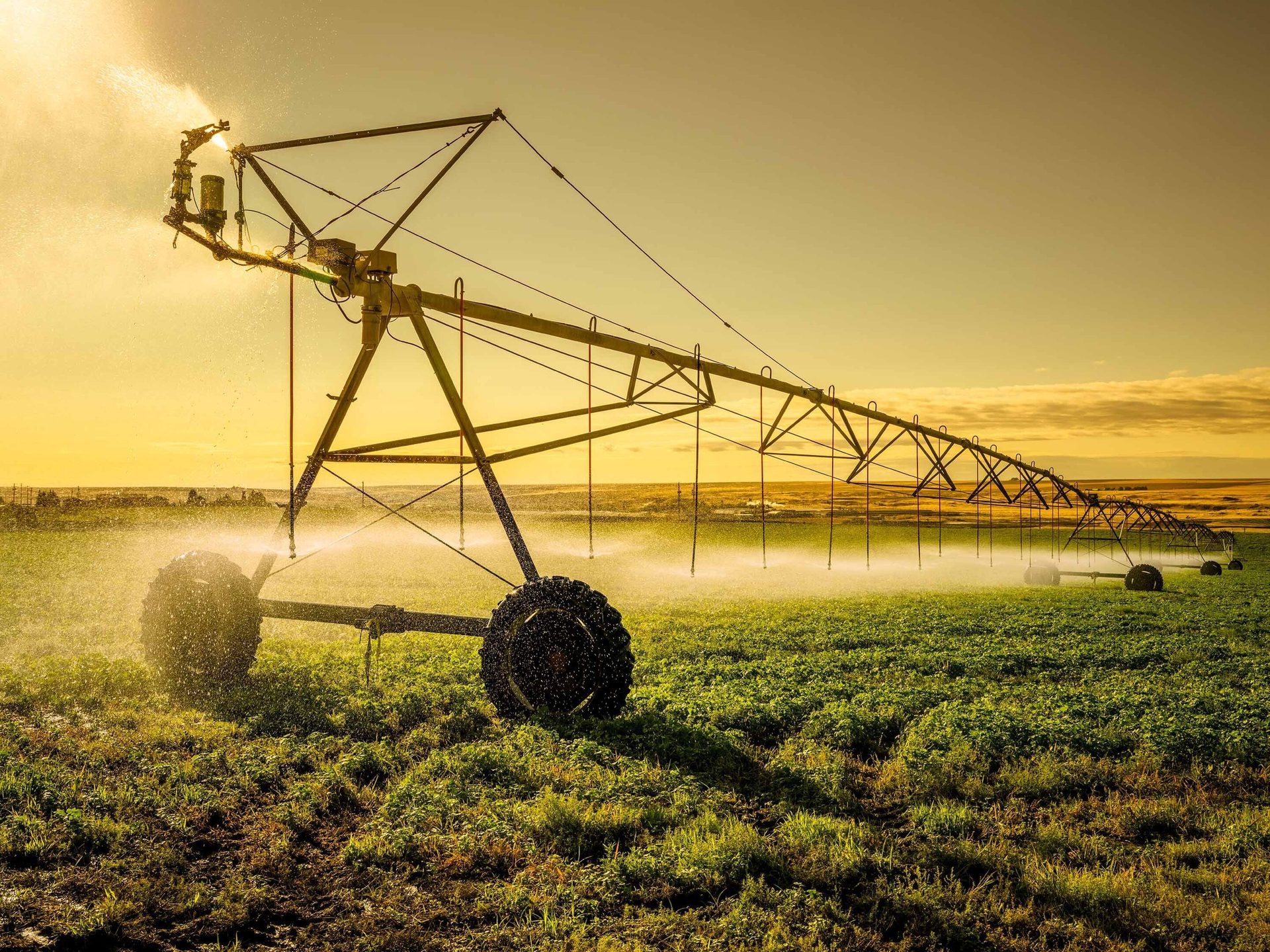
Image credit: chinaface/E+ via Getty Images
SCROLL DOWN
The modern food, agricultural, and water (FAW) systems are major elements of what economists label the "peacetime economy." The U.S., like most nations with advanced economies, strives to ensure its citizens' well-being and provide a prosperous economic environment during times of peace. FAW-related infrastructure and processes are critical elements of the economy but also help provide for the nation's well-being (public health and welfare), as well as national security. Per the U.S. Department of Agriculture (USDA) in 2025, "Food policy is national security policy."1
Since FAW systems are categorized by the Federal Government as "Critical Infrastructures," their domains are provided special protections through a multi-layered system of legislation and government and private sector partnerships, programs, and information-sharing. This approach of public/private partnering is necessary because the vast majority of FAW is privately owned, making collaboration essential.
As history has proven, war changes everything, including FAW. Although there is no precise probability that the U.S. will ever go to war with China, many analysts and military strategists consider it an increasingly significant risk. Reasons for this include rising geopolitical tensions, U.S. decoupling efforts, and China's military buildup and its assertive stance on Taiwan. These issues are made more complex by concerns of U.S. military readiness, particularly in the vital Asian trade routes of the Indo-Pacific regions. Given even the remote prospect that war might occur, it is important for food processors to begin now to prepare contingency plans. If the war in Ukraine is a portent of future war, attacks will be directed on FAW resources.
War Economy Realities
War economies differ fundamentally from those in times of peace in that they reorient national resources and labor, while simultaneously implementing changes through government control that favor the military effort instead of civilian goods and services. This transition shifts production priorities but also likely changes labor dynamics. Collectively, these changes could profoundly alter the government's role in the economy. International trade would likely be restricted or at least redirected away from normal global markets (such as China) in favor of allies. Embargoes and sanctions would also be rapidly imposed and, as a result, global supply chains would face major disruptions.
Accompanying these potential economic calamities, U.S. FAW resources would become probable targets. Given that China has less arable land than the U.S. but a much larger population, it is highly dependent on global food imports. This makes its primary strategy in a conflict scenario one of exploiting U.S. vulnerabilities rather than engaging in a symmetric food war. Biosecurity, as well as food safety and defense programs, would by necessity need to rapidly adapt to a wartime footing. Most FAW-related companies are not currently prepared to rapidly make the necessary changes.
FAW and "FWE" Sector Threats
Most prominent among wartime threats for FAW is the probability of continuous and coordinated cyberattacks and other forms of sabotage (insider threats). Both would target facilities, but also the supply chains they support across all three domains (food, agriculture, and water). Additionally, cyberattacks would likely be launched persistently on energy sources, which are vital to FAW. The food–water–energy (FWE) nexus characterizes the deep interdependence of these three essential sectors.
Water is needed for energy production, agriculture (e.g., irrigation), and food processing. Energy is used to treat and transport water, grow food, and transport it to the consumer. Food production, therefore, is reliant on uninterrupted water and energy. Damaging or destroying either one of the sectors, even if done on a localized basis, has the potential of severely disrupting the food chain and water availability.
Cyber Warfare
Cyberattacks are considered by many adversarial nations as one of the most effective and deniable methods of sabotage.2 Chinese state-sponsored hackers have for years been observed targeting and embedding in U.S. critical infrastructure sectors. FAW systems are likely compromised, many silently, waiting for the day when embedded malware will be activated.
- Water infrastructure: Cyber intrusions into water and wastewater treatment facilities could enable adversaries to manipulate chemical levels, disrupt flow, or damage equipment and even potentially contaminate drinking water supplies or interrupt service to both civilian and military facilities.
- Agricultural technology: The FAW and FWE sectors are increasingly reliant on cyber–physical systems (CPS) and the "Internet of Things" (IoT) for the operation of automated equipment, logistics, and supply chain management. Destroying, disabling, or surreptitiously altering these systems could damage food production on farms by disrupting planting and harvesting schedules, as well as damage large-scale animal production by manipulating ventilation, watering, and feeding systems, or damaging associated equipment. Damages to producer (animal and plant) FAW and FWE could also cascade into food processing by affecting "just-in-time delivery" of agricultural products to processors or even, under some circumstances, deleteriously affecting food safety programs.
- Food processing and distribution: Cyberattacks on major food processing plants and distribution networks would create widespread disruptions and shortages. The 2021 ransomware attack on the major meat processor JBS demonstrated the vulnerability of the food supply, as well as the associated risks that can accompany the loss of a single processing plant and its impact on the overall food supply.
“Agroterrorism could undermine food safety by directly contaminating the food supply with biological, chemical, and radiological agents.”


Agroterrorism
A second maturing threat and one that is capable of causing the most long-term consequences is agroterrorism attacks against U.S. animal and plant agriculture. In time of war, FAW-related corporations should expect simultaneous and coordinated cyber and agroterrorism attacks. China has been accused of conducting long-term dual-use (military and civilian applications) biological and chemical research that could be used to target animal and plant agriculture.
Agroterrorism could undermine food safety by directly contaminating the food supply with biological, chemical, and radiological agents. All would cause widespread but variable effects including illness, injury, and death, which would simultaneously challenge the government's and One Health systems' capacities to handle the associated caseloads. Agroterrorism attacks would also likely destroy public confidence in the corporate enterprise responsible for the targeted element in the food supply chain (e.g., animal and/or plant production), as well as federal government agencies charged with oversight and consumer protection.
Beyond these problems, agroterrorism would also cause severe economic damage through lost exports and industry impacts such as degradation or loss of brand quality trust and lost sales. Combined, all of the physical, supply chain, and economic effects would likely create widespread public panic and social disruption. The dual threats to both public health and the economy make agroterrorism a significantly growing concern of national security.
There have been recent, documented cases of Chinese nationals attempting to smuggle agricultural pathogens into the U.S. The Federal Bureau of Investigation (FBI) has described these incidents as "potential agroterrorism," which could be used to target crops like wheat, barley, and corn. The smuggled fungus, Fusarium graminearium, causes "head blight." If used as an agroterrorism weapon, Fusarium graminearium could lead to billions of dollars in crop losses. The fungus also produces toxins that, if introduced into the food chain and remaining there undetected, are harmful to both humans and livestock. Although little public information has been made available by the government, these cases may be examples of adversarial "probing missions," designed to determine how rapidly pathogens could be detected.
Framing the Adversarial Threat—Agroterrorism Testimony
On September 16, 2025, one of the authors of this article, Dr. Cris Young, testified before the House Subcommittee on Emergency Management and Technology. The House Subcommittee held a hearing titled, "Surveying the Threat of Agroterrorism: Perspectives on Food, Agriculture, and Veterinary Defense."3 Dr. Young's statement for the record is given in part below.
I am here today to discuss the critically important topic of agroterrorism.
Each year, Auburn University's biosurveillance research team reviews several thousand articles across a broad spectrum of open sources. Also, on average, a couple of hundred books are read, perhaps not completely, but certainly, we thoroughly read those sections that are relevant to ongoing analytical operations and agroterrorism. One consistent finding is that there is no single vetted source of information addressing the diversity and complexity of threats to food, agriculture, and water. Also, even more importantly, no work explains how those threats can be mitigated.
Our team spends a great deal of time examining data generated by private industry, which holds more food-, agriculture-, and water-related data than the government. Food, agriculture, and water systems are widely considered essential components of our national security. Without security and resiliency, these critical infrastructures that provide safe, reliable food and water supplies are vulnerable to exploitation, thereby jeopardizing our nation's public health, economic prosperity, military readiness, and force projection capability.
The term "biosecurity" traditionally refers to a set of practices on farms designed to minimize risk from disease in plants or animals. But biosecurity can also be thought of as a desired state of being—a matrix of success, if you will, where risks and threats have been identified and neutralized before they become manifest.
The term "biosecure" means to be protected against harmful biological agents (both naturally occurring or intentionally introduced) including infectious diseases, pests, and invasive species, etc. that may have impact on the health status of a system (animal, plant, ecosystem). Maintaining systematic biosecurity entails continuous monitoring. This persistent stare needs to occur across the continuum of security domains, including:
- Agriculture security (both animal and plant)
- Public and One Health security
- Laboratory research security
- National security and defense intelligence
- Environmental security.
To frame the problem succinctly, if the United States ever goes to war with a pacing adversary, food, agriculture, and water will be as important as traditional military concerns, such as missiles, submarines, etc. Critical problems could emerge first to our west in the Indo-Pacific, but perhaps even within the continental U.S. Wars can be and are lost by the lack of material, but they can also be lost due to strategic and tactical errors involving food and water. Non-state actors like terrorist and violent extremist organizations may also target our homeland food supply via the agriculture sector. I am especially concerned about this during gray zone conflict.
What would our adversaries' objectives be?
Put simply, their goal is food and water disruption, followed by tactical and strategic dominance, and eventual destruction. This paints a bleak picture, but food, agriculture, and water threats are already widely distributed and continually growing in intensity. Both the critical infrastructure and the food supply itself will almost certainly be more intensely targeted in the future. Attacks are likely to be geographically diffused, staggered over time, and be combined with cognitive warfare elements, the specifics of which are more suitable for a classified forum. Because of this threat landscape, it is critical that the U.S. Government better prepare for and mitigate threats to our agriculture sector.3
Priority Solutions
Preparation for a potential conflict with China will require FAW and FWE systems to rapidly enhance resilience against a probable series of wide-ranging and long-duration attacks and disruptions.
Reorganize Oversight
The U.S. Government should reorganize USDA and the Food and Drug Administration (FDA) by removing inspection and food safety elements and creating a single, new, standalone food safety agency. Further, food inspection functions that are spread across a range of federal agencies beyond USDA and FDA need consolidation. This new agency could be charged with eliminating inconsistent and duplicative oversight and resolving agency conflicts of interest, thereby enabling a more efficient, data-driven, risk management approach to inspection. The current fragmented system does not serve food safety well. It is often reactive, rather than proactive, in the adoption of regulations that enable the rapid development and promotion of new technologies, processes, and procedures.
“Technology and processes for more rapid detection (including real-time) of pathogens and contaminants are under development and could be rapidly implemented after regulatory agency approval.”
Invest in Biosurveillance and Inspection Infrastructure
Current organoleptic testing strategies and inspection processes are inadequate to meet the needs of modernized food safety programs, even in times of peace. In times of war, the deficiencies of federal inspection processes would become even more prominent. Their highly subjective nature make them subject to human error and unreliable for detecting low levels of microscopic biological and chemical contamination. These processes are also too slow to meet both industry and consumer demands.
While federal inspection processes remain useful for overall quality control, food safety testing is increasingly superseded by advanced detection processes, technologies, and testing at food processing facilities to ensure safety from dangerous pathogens and contaminants. These newer technologies and testing measures have increased the sensitivity and accuracy for detecting pathogens and contaminants; however, they remain largely hampered by the time required to complete not just the tests themselves, but also the federal reporting. Technology and processes for more rapid detection (including real-time) of pathogens and contaminants are under development and could be rapidly implemented after regulatory agency approval. Food production and processing corporations should invest in these comprehensive biosurveillance technologies and processes that are now possible throughout the farm-to-consumer food supply chain.
Strengthen Cybersecurity Defenses Against Targeted Attacks
China's state-sponsored hackers have already infiltrated U.S. critical infrastructure, including agricultural systems, with pre-positioned malware. A conflict would likely bring significant cyberattacks designed to cause widespread disruption.
Invest in FAW Cybersecurity. Bipartisan legislation was introduced in 2025 to enhance cybersecurity in the agriculture sector. The combined focus of H.R.4046 (Cybersecurity in Agriculture Act), S.754 (Farm and Food Cybersecurity Act of 2025), and S.2866 (Amendment to National Agricultural Research, Extension, and Teaching Policy Act of 1977) are a few examples of efforts meant to strengthen the resilience and security of the American food and agriculture industry against a growing number of cyberattacks. These bills use a multi-pronged approach to establish research centers, conduct vulnerability assessments and crisis simulation exercises, and enhance collaboration among government agencies and the private sector.
This last element is made more complex because, given the regulatory authorities of the food and agriculture-related agencies (FDA and USDA), communication with the food and agriculture industry is usually not direct but rather made through corporate legal staffs. In times of peace, the regulatory shadow decreases communication; in times of war, this becomes an even more prominent gap.
Food corporations should invest in robust cybersecurity hardware and become engaged in these regional centers. Food corporations should also work with the sponsoring federal agencies through interaction with the research and through their government liaison offices. This private-government partnership effort will help ensure corporate relevancy of the research, information-sharing, and resulting products.
Protect FAW Intellectual Property (IP). China has a long history of stealing U.S. FAW-related IP, including advanced seed technologies. Protecting systems, processes, and equipment from foreign penetration and acquisition is critical to maintaining corporate security and thereby profitability and brand quality. Food processors, particularly those with facilities in China, should assume that their systems are compromised and therefore highly vulnerable to exploitation. Food processors should immediately contact experienced third-party information technology (IT) and operational technology (OT) security vendors to request a systems audit and systems penetration testing.
Secure Vital FAW Infrastructure
USDA developed the National Farm Security Action Plan to address foreign land acquisitions and protect against the infiltration and sabotage of critical infrastructure like irrigation and transportation systems. This plan should only be considered as designating generalized baseline security. To help develop corporation-specific plans, food processors should consider contracting third-party security vendors with documented FAW clientele and experience.
Develop Wartime Testing Processes. Careful consideration should be made when assuming disruptions and potential sabotage and contamination of agricultural products that are critical to the operation of the food processor. During times of war, increased testing of agricultural products will become vital to ensure that contaminated ingredients are not allowed to enter the food chain.
Testing will likely be necessary for contamination by novel sources and means, meaning that unknown substances, contaminants, or methods not normally included in testing regimens are more likely to be of future concern. A comprehensive set of wartime posture ingredient testing and associated food safety protocols should be developed now, based on zero-trust principles, and then tested, trained, and exercised using the same security posture. Although these standards would not necessarily be implemented in peacetime, knowing they are ready when required will ensure minimal delays and minimized risk.
Invest in Water Infrastructure Security. Water infrastructure is a likely target during times of war. U.S. water utilities are increasingly experiencing cyber-based threats from state-funded groups including those in China, Russia, Iran, and North Korea. The sector is underfunded and lacks both the personnel and expertise capable of dealing with the maturing sophistication of these threats and threat actors. Companies should consider investment in water-specific cyber expertise and provide collaborative assistance to local water utility suppliers.
A zero-trust water security program should likewise be developed, and an accelerated testing protocol (daily or weekly) for times of emergency be developed and regularly exercised, whether in-house (best option) or by third parties. Food processors should also develop and regularly exercise requirements and protocols for their own processing facility's water security infrastructure, as well as for food and feed ingredient and commodity suppliers. Any input into the food chain must be robustly protected, knowing that it could be targeted.
Increase Domestic Production and Resilience
A war would likely severely disrupt international shipping, making access to imported food, food ingredients, and agricultural inputs unreliable.
Reduce Reliance on Foreign Supply Chains. A recent analysis found that the U.S. remains heavily dependent on exports to China for soybeans, while China is diversifying away from all U.S. agriculture. In a conflict, the U.S. must be prepared to reduce imports of foods and food ingredients for human and animal consumption and re-route exports of its own products, even when it temporarily impacts parts of the food and agricultural business economies.
Support Local and Smaller-Scale Farms. A heavy reliance on large-scale agriculture and consolidated processing makes the food supply more fragile to disruption from natural, accidental, or deliberate events. Consolidation in both agriculture and food processing has also introduced additional risks that were not present when the farm and food processing economies were more regionally or locally distributed. Corporate investment in smaller, regional, or local farms and a more decentralized distribution network could create essential redundancy and reduce the potential impact of any single disruption, regardless of its origin. Deliberate contamination of farms and animal production facilities cannot be ruled out.
“Alternate operational plans, processes, and resources for dealing with extended internet, intranet, and systems disruptions should be rapidly developed. Assume these types of disruptions will occur in times of war.”
Food processors should have plans in place that enable them to rapidly pivot away from production facilities and farms that are intentionally contaminated or otherwise affected. Testing of the pivot plans should be prioritized in the coming year. Although this type of planning is similar to business continuity planning, it is quite different in the sense of its scale. While business continuity plans proactively address foreseeable disruptions like weather events and temporary supply chain disruption issues, the effects of war would introduce a higher magnitude of systemic risks and threats that could damage entire food systems or networks by creating destructive, cascading failures that could paralyze a food processing company or even a region's ability to produce, transport, and distribute food for long periods of time.
Alternate operational plans, processes, and resources (e.g., paper forms) for dealing with extended internet, intranet, and systems disruptions should be rapidly developed. Assume these types of disruptions will occur in times of war. Alternative documentation planning protocols should be developed and, importantly, exercised now. Companies should work with regulatory agencies to ensure that the alternate documentation forms are pre-approved for emergency use cases. Scenario planning should also include those situations where a full contingency of personnel may not be present, such as occurred during the COVID-19 pandemic.
Paper documentation should be distributed to facilities and operational outlets and logistics systems, and personnel should be trained in their use. Small-scale mirrored testing (normal documentation processes plus paper-based documentation) should be conducted regularly.
Pivoting to analog systems and processes may also be necessary to deal with short, medium, and extended cyber-based disruptions. As was clearly illustrated during COVID-19, supply chain weaknesses associated with the current strategy of just-in-time food processing will likely, in future scenarios, similarly reflect what was observed then, perhaps on a larger scale. This will require alternative farm- and facility-to-processor protocols to be developed since both types of enterprises are highly dependent on properly functioning transportation and logistics scheduling systems.
Address Agroterrorism and Biosecurity Threats
China could choose to exploit existing vulnerabilities by intentionally introducing plant or animal diseases to disrupt the food supply.
Enhance Biosecurity Measures. USDA's National Farm Security Plan emphasizes strengthening plant and animal health protections and developing vaccines and therapeutics for diseases like avian influenza and African swine fever. Similar types of more robust plant health protective measures are a current critical need.
Increase Biosurveillance. Investing in better comprehensive (farm-to-consumer) biosurveillance technology and processes is key to the early detection of emerging food security threats that cross among humans, animals, and the environment. The authors support the U.S. Congress' efforts to develop an intelligence element at USDA and to fund AgARDA.
The USDA website indicates that the National Security Division is the USDA's bridge to the Intelligence Community, National Security Council, and interagency working groups on national security threats and policy coordination. The National Security Division guides Food and Agriculture Sector security and resilience efforts and provides strategic intelligence. It also protects against insider threats and foreign intelligence entities and advises on the impact of foreign investments to U.S. economic and national security.
The authors further applaud Congressional efforts to create AgARDA. According to a USDA report, "Section 7132 of the Agricultural Improvement Act of 2018 (Public Law 115-334), also known as the 2018 Farm Bill, 7 USC 3319k, established the Agriculture Advanced Research and Development Authority (AgARDA) pilot authority to develop technologies, research tools, and products through advanced research on long-term and high-risk challenges for food and agriculture to ensure that the United States maintains its position as leader in global agricultural Research and Development (R&D)."4
TABLE 1. Fake Internet Domains Registered as Part of Typosquatting Campaign
These nascent efforts need deliberate, substantial support and funding. Current staffing and funding is insufficient to successfully execute this critical mission.
Recent statements from both U.S. and Chinese officials, as well as analyses from independent experts in academia and business, emphasize that war between the two nations is not inevitable, even though tensions continue to increase. The American people and American business must recognize that China is in the early stages of what is likely to be a long-term, high-stakes rivalry. Even so, both countries have strong incentives to avoid a catastrophic military conflict, which, if ever realized, would cause massive casualties and severely damage the global economy.
The great American poet Maya Angelou's statement about the future said it best: "Hoping for the best, prepared for the worst, and unsurprised by anything in between"5 is not only the best attitude for Americans to adopt as individuals, but also for business corporations and the entire nation.
Notes
- The data referred to in this article was obtained using private sector analytical services and databases made available to the authors. The authors sincerely thank those responsible for the analysis.
- Data obtained from private sector sources.
References
- U.S. Department of Agriculture (USDA). "Farm Security is National Security: The Trump Administration Takes Bold Action to Elevate American Agriculture in National Security." July 8, 2025. https://www.usda.gov/about-usda/news/press-releases/2025/07/08/farm-security-national-security-trump-administration-takes-bold-action-elevate-american-agriculture.
- Engstrom, Jeffrey. "Systems Confrontation and System Destruction Warfare." February 1, 2018. RAND Corporation. https://www.rand.org/pubs/research_reports/RR1708.html.
- Department of Homeland Security. "Surveying the Threat of Agroterrorism: Perspectives on Food, Agriculture, and Veterinary Defense." September 16, 2025. Transcript: https://app.legislata.com/public_offices/1174/posts/2647342; Video: https://homeland.house.gov/hearing/surveying-the-threat-of-agroterrorism-perspectives-on-food-agriculture-and-veterinary-defense/. Dr. Young's testimony begins at 1 hour, 29 minutes, 59 seconds.
- USDA. "AgARDA: Agriculture Advanced Research and Development Authority: A Vision for Disruptive Science to Confront Audacious Challenges." https://www.usda.gov/sites/default/files/documents/agarda-strategic-framework.pdf.
- Angelou, Maya. I Know Why the Caged Bird Sings. Random House, 1969.
Cristopher A. Young, COL, USA (Ret.), D.V.M., M.P.H., Diplomate A.C.V.P.M. is a Professor of Practice at Auburn University's College of Veterinary Medicine and an Adjunct Professor at the College of Veterinary Medicine at the University of Georgia's Department of Pathology. He received his D.V.M. from Auburn University's College of Veterinary Medicine in 1994. He completed his M.P.H. degree at Western Kentucky University in 2005 and is a Diplomate of the American College of Veterinary Preventive Medicine.
David E. Bragg, M.S.A.E. is a Research Program Manager and Adjunct Instructor of Intelligence at Auburn University. He is a retired senior intelligence officer and leader with deep expertise in the operational applications and technological quick reaction development of intelligence, surveillance, and reconnaissance platforms and sensors. He received B.S. and M.S. degrees in Aerospace Engineering from West Virginia University, where he specialized in artificial intelligence and unmanned aircraft flight control systems.
Robert Norton, Ph.D. is a Professor and National Security Liaison in the Office of the Vice President of Research and Economic Development at Auburn University. He specializes in national security matters and open-source intelligence, and coordinates research efforts related to food, agriculture, and veterinary defense.