MANAGEMENT
By Bonna J. Cannon, Founder, Bonnafide LLC
The High Costs of Saving Money: How Overzealous Capital Controls Undermine Food Safety, Worker Safety, and Plant Performance
Delaying capital that mitigates known hazards is not just bad for margins; it is regulatory risk
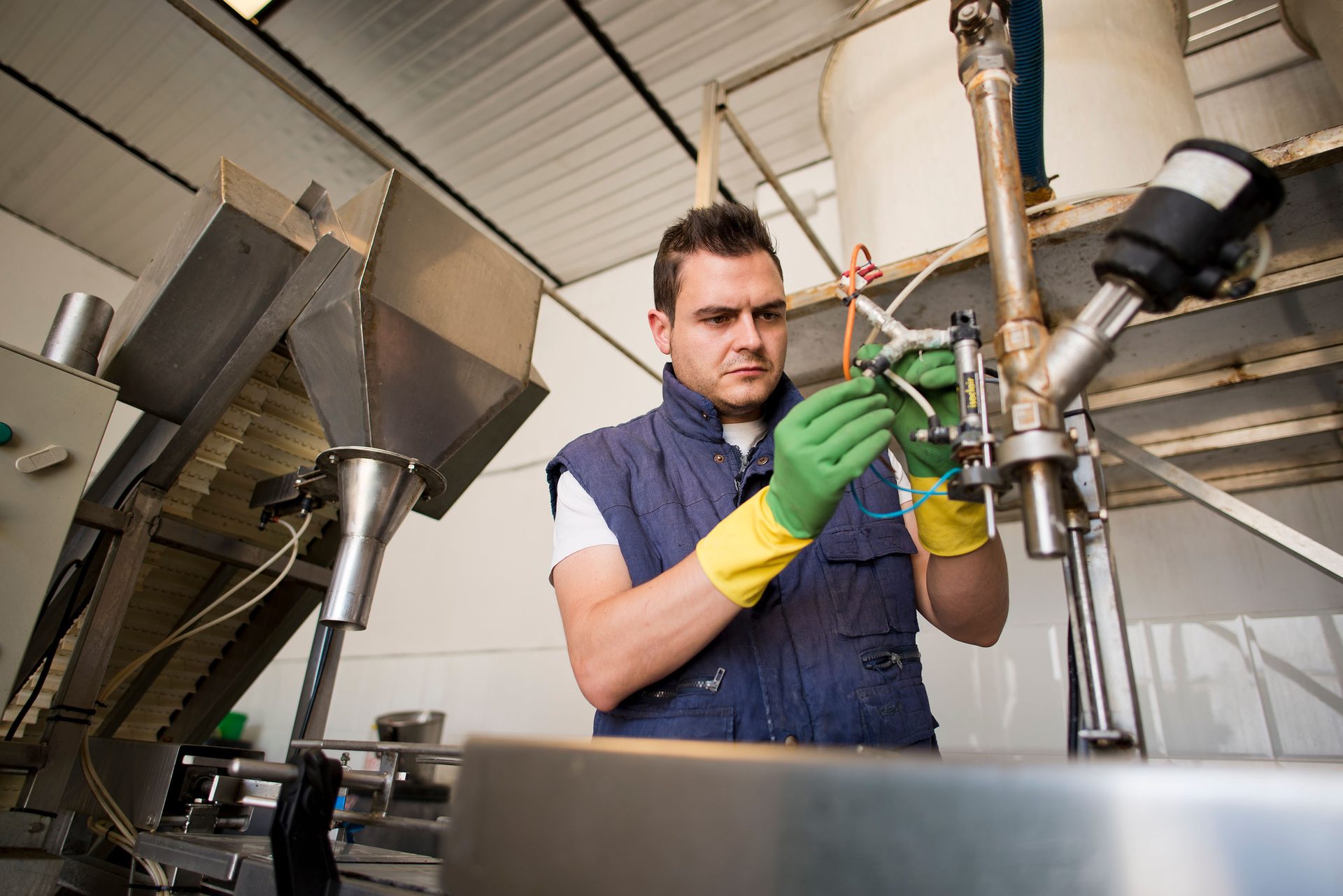
Image credit: July Alcantara/E+ via Getty Images
SCROLL DOWN
Food safety failures rarely come from a single failed test or bad batch. More often, they are the inevitable outcome of years of known risk, deferred repairs, tolerated workarounds, and a culture that treats safety improvements as optional overhead. I put it plainly: pay now, or pay many, many times over later. Yet, in many food processing companies, the capital approval and procurement regimes reward short-term cost avoidance, frozen capital expenditures line items, and procurement "savings" to hit immediate budgeting targets while almost completely ignoring the cost of time, risk, and opportunity that plant operations are forced to bear.
The time has come to shine a light on the technical, economic, and human costs of deferred capital for food safety, especially now that recent U.S. legislation (the "One Big Beautiful Bill") provides new tax levers that can change how return on investment (ROI) is calculated. If leadership does not adapt, the result will be more recalls, more injuries, and more brand damage—all costing far more than a glorified lower capital spend.
Deferred Capital as a Food Safety Hazard
Every delayed repair or replacement carries a technical cost. When seals are worn, when guards are missing, or when corrosion is creeping into gaps or joints, these are not mere nuisances—they are active food safety hazards. Environmental pathogens exploit leaks, condensation, cracks in floors, and poorly maintained HVAC systems. Likewise, foreign materials (e.g., metal, plastic, rubber) become more likely with aged components.
Take Listeria monocytogenes as an example. Its persistence in food processing environments is well documented, and it has been demonstrated that L. monocytogenes adapts to survive stressors in food plants — cold temperatures, low humidity, biofilm formation, and disinfectant exposure. Even after effective sanitation, it can readily re-contaminate product through aerosols, drains, and compromised infrastructure.
Ignoring or delaying capital upgrades (e.g., basic replacements, equipment with hygienic design, ventilation or airflow upgrades, proper guarding) shifts risk from management to quality assurance, then to front-line operators, and finally to consumers. Under current regulatory obligations, preventive controls are not optional. The Food Safety Modernization Act's (FSMA's) Preventive Controls Rule (21 CFR Part 117) requires companies to identify hazards, implement preventive measures, and maintain documented food safety plans.1 Delaying capital that mitigates known hazards is not just bad for margins; it is regulatory risk.
The Economics of Delay: An Invisible Margin Bleed
When procurement and finance celebrate "savings" from rebidding or deferring projects, what they often ignore are the hidden costs that quietly bleed margin, often month after month.
Some primary invisible costs include:
- Yield loss and rework: Product that must be re-washed, re-processed, held, or scrapped because of contamination risk or foreign material.
- Sanitation overtime: More hours, more labor, and more chemical usage in an attempt to compensate for mechanical or facility deficiencies.
- Recalls and complaints: The direct cost of a single recall averages $10 million in the U.S. food industry, not counting brand damage and lost sales.4
- Lost opportunity: Upgrades that could have improved throughput, reduced scrap, or supported new contracts never materialize. This lost revenue is invisible to project ROI.
These costs rarely appear in financial reports, but they drain competitiveness. Plants juggling breakdowns and sanitation overtime lose efficiency, delivery deadlines, and customer trust.
“The One Big Beautiful Bill Act of 2025 expands bonus depreciation and accelerated expensing for qualifying investments, which may include safety, sanitation, infrastructure, and hygienic equipment.”

The Human Factor: Culture, Morale, and Engineering Attrition
Money is not the only resource lost. Deferred capital corrodes culture. Repeated delays for what engineering, quality assurance, or maintenance know are essential repairs or upgrades teach teams to stop striving.
- Silence and risk normalization: Operators stop reporting problems, maintenance resorts to workarounds, and quality assurance writes up incident reports, but expectations slip. The plant learns to accept "fixed enough" rather than "fixed right."
- Attrition of talent: Capable engineers disengage when projects are perpetually stalled. When they leave, institutional knowledge vanishes, weakening preventive food safety culture.
- Worker safety: Worn guards, missing interlocks, and workarounds (e.g., wire ties, improvised fixes) expose employees to OSHA-reportable hazards.
When culture shifts like this, corrective action becomes harder. Preventive mindset withers and eventually dies. What was once unacceptable becomes the norm, and a dangerous cultural drift follows.
Policy Shift: Opportunity in the OBBB
This is where financial equations change. The One Big Beautiful Bill Act of 2025 (OBBB) expands bonus depreciation and accelerated expensing for qualifying investments, which may include safety, sanitation, infrastructure, and hygienic equipment.5
What this means:
- Projects formerly delayed "until next year" may now pay off sooner because tax incentives shorten payback times.
- Preventive safety investments, when modeled with downtime, recall, and reputational risks, deliver significantly higher ROI than procurement-only calculations suggest.
- Finance, procurement, and legal must align to avoid letting procedural bottlenecks erase these legislative benefits.
When used properly, these provisions are not just accounting maneuvers. They are levers to justify the right projects at the right time and to stop starving plants of preventive investments.
What Leadership Must Change
To course correct, food processors need to shift their systems, not just individual decisions:
- Prioritize safety capital: Classify food safety and worker safety projects as accelerated review items, exempt from freezes.
- Expand ROI models: Require that ROI include downtime, rework, sanitation, recall, regulatory risk, and opportunity cost.
- Procurement beyond low bid: Evaluate sanitary design, lifecycle cost, and availability of parts, not just upfront purchase price.
- Accountability for delays: Document procurement and legal cycle times; escalate when safety-critical projects stall.
- Educate finance/legal: Ensure that non-technical functions understand FSMA obligations and risk transfer from deferred capital.
- Leverage tax levers: Scope and document projects so they qualify for accelerated depreciation or credits.
Time, Risk, and Opportunity Cost
These three categories, often missing from financial justifications, are the crux of the problem:
- Time: Every month of delay increases exposure.
- Risk: Hazards compound until they culminate in recalls, outbreaks, or injuries.
- Opportunity: Lost efficiency, throughput, and growth vanish without ever showing up in budget reviews.
When ignored, these factors create a distorted picture of "savings." In reality, they guarantee that future costs will far exceed the avoided expense.
Conclusion: From Band-Aids to Systems Thinking
Plants that run on zip ties and improvisation do not do so because their people are lazy. They do it because their governance systems force them into "survival mode." However, risk deferred is not risk avoided. It is merely shifted from executives to operators, from spreadsheets to consumers.
Leadership must stop celebrating the illusion of thrift while real costs mount invisibly. With the OBBB, the industry has an opportunity to reverse this pattern by aligning financial incentives with food safety, worker safety, and margin protection. The question that remains is: Will leadership recognize it in time, or keep running on borrowed time until the inevitable crisis makes the real cost of "saving money" unavoidable?
Note
The findings and conclusions of this report are those of the authors and do not necessarily represent the official position of the Centers for Disease Control and Prevention (CDC).
References
- U.S. Food and Drug Administration (FDA). "Current Good Manufacturing Practice, Hazard Analysis, and Risk-Based Preventive Controls for Human Food (21 CFR Part 117)." September 2015. https://www.ecfr.gov/current/title-21/chapter-I/subchapter-B/part-117.
- Jackson, G. "Reducing Food Processing Plant Downtime." Processing Magazine. March 22, 2021. https://www.processingmagazine.com/maintenance-safety/condition-monitoring/article/21213143/reducing-food-processing-plant-downtime.
- Worximity. "The Hidden Cost of Downtime in Food Processing." October 15, 2021. https://www.worximity.com/blog/the-hidden-cost-of-downtime-in-food-processing.
- Grocery Manufacturers Association. "Capturing Recall Costs: Measuring and Recovering the Losses." October 2011. https://globalfoodsafetyresource.com/wp-content/uploads/2014/08/www.gmaonline.org_file-manager_images_gmapublications_Capturing_Recall_Costs_GMA_Whitepaper_FINAL.pdf.
- Traub, J. and A. Taylor. "A closer look: Inside the new tax law." Deloitte. https://www.deloitte.com/us/en/services/tax/articles/inside-the-new-tax-law.html.
Bonna Cannon doesn't do food safety theater. She builds systems that actually work. With over 25 years in engineering, operations, and quality leadership at Chobani, Tree Top, The Cheesecake Factory, and Clif Bar, she now leads Bonnafide LLC. Known for cutting through the noise and pushing past "check-the-box" compliance, Bonna helps companies prevent the kinds of failures that put people at risk—a mission made personal after her son's near-death and life-long kidney damage from E. coli O157:H7.