TRAINING
From Audit-Ready to Food-Safe: Making Better Decisions Across the Food Supply Chain
How quality assurance professionals and frontline leaders can build better decision-making capabilities across the food supply chain
By Andrew Thomson, Director, Think ST Solutions and Matthew Wilson, Ph.D., Senior Lecturer, Adelaide University
SCROLL DOWN
Video credit: Yuriy Kraynov/Creatas Video+/Getty Images Plus via Getty Images
> SPOtliGHT
Food safety outcomes are shaped by the quality of decisions made every day at both a strategic level and across production, warehousing, and kitchen operations. At an operational level, many of these decisions are made during production, storage, distribution, service, and cleaning, often when conditions are changing and information is incomplete.
This raises an important question: Do food safety systems place enough emphasis on how decisions are made? Many systems rely heavily on documentation, audits, and increasingly, digital tools and AI-generated information; however, they require professionally led oversight and sound, risk-based thinking and judgement. This point was emphasized in the December 2025 webinar held by the Food and Agriculture Organization of the United Nations (FAO) and reported by Food Safety Magazine.1
In practice, decisions in food operations are driven by a combination of:
- Available information
- Perceived risk
- Experience-based judgment (i.e., "gut feel")
- Organizational signals about what really matters—speed, cost, compliance, or safety.
When food safety systems prioritize audit readiness and rules over judgment, leaders and production employees rely on habit and assumptions. When conditions change, those habits are often slow to adapt.
This may explain why food safety incidents continue to occur despite extensive foundational training, detailed HACCP plans, and increasingly sophisticated digital systems. An underlying issue is decision capability: the ability to recognize and interpret risk, challenge assumptions, and act appropriately at the point of risk.
In a 2023 article on decision-making,2 McKinsey & Company describe decision capability as a process of choosing among options, a task that becomes more complex in organizational settings where roles, context, and competing priorities matter. Meaningful decisions emerge not just from data or rules, McKinsey & Company argues, but from clarity about who makes the decisions, the empowerment of those closest to the work, and the capacity to make choices in context.
This article moves the conversation forward. Rather than revisiting why audits and traditional compliance training fall short, the focus is on what actually improves food safety outcomes: how quality assurance professionals and frontline leaders can build better decision-making capabilities across the food supply chain.
These ideas align with the work of W. Edwards Deming,3 who emphasized that quality is not achieved through inspection alone, but also through systems and leadership practices that enable people to make good decisions. In food safety, this means designing processes, training, and culture to support sound judgement where it matters most.
Central to this shift is moving quality assurance (QA) from an audit-driven role to a strategic business partner, supported by senior leadership, frontline leaders, and a culture that reinforces risk-based thinking rather than adopting a compliance mindset.
Bloom's Digital Taxonomy Reframed: From Knowledge to Decision Capability
Bloom's Digital Taxonomy4,5 is widely used to align educational outcomes to suit the intended learners. In this article, it is presented not as an abstract educational theory but as a framework for understanding how knowledge becomes actionable in the workplace.
Applied to food safety, the taxonomy describes a progression from simply recalling procedures to making informed decisions at the point of risk. Each level of training builds decision-making capability: understanding why procedures matter, applying them in context, analyzing deviations, evaluating risk, and ultimately creating improvements that prevent incidents.
This provides a clear roadmap for transitioning employees from understanding the rules to consistently making the right decisions in the workplace.
Viewed this way, the taxonomy describes a progression from basic knowledge to decision-making capability at the point of risk (Table 1).
TABLE 1. Bloom's Digital Taxonomy applied to food safety: from basic knowledge to decision-making capability4,5 (Credit: A. Thomson and M. Wilson)
Most training remains focused on the lower-order cognitive processes, remembering and understanding, leaving employees capable of reciting rules.
Audit-Ready is Not the Same as Food-Safe
Across industry events and professional networks, being audit-ready is considered the end goal. Teams seek to ensure documentation is current, records are complete, and non-conformances are closed.
Audits confirm the existence of a system, but not necessarily how it performs when conditions change. They acknowledge documentation (digital or paper-based), but do not identify the quality of decisions made.
Blind Spots in Food Safety Investigations
Similar gaps are evident in how food safety incidents are investigated. John Guzewich, M.P.H., a retired U.S. Food and Drug Administration (FDA) official, created and managed the FDA Center for Food Safety and Applied Nutrition (CFSAN) foodborne disease surveillance and response coordination program. In a recent LinkedIn post,6 Mr. Guzewich highlighted a persistent blind spot: root cause analysis that stops at the technical layer. His thoughts are summarized below.
Investigations often focus on what is easiest to measure: environmental swabs, microbiological results, and structural findings. While important, these explain what happened, not why. A positive swab or a faulty drain is a symptom; it rarely explains the decisions, behaviors, and operating conditions that allowed the issue to occur.
Commonly underexplored contributors include inadequate training (e.g., staff may lack the knowledge or oversight needed to consistently apply food safety protocols), HACCP plans that exist on paper but do not guide real-world decisions, and leadership or resourcing choices that shape everyday behavior. These influences are rarely captured by audits, yet they strongly affect outcomes.
When root cause analysis remains superficial, corrective actions default to familiar responses: more cleaning, more testing, and more audits. Short-term expectations may be met, but outcomes rarely change because systemic issues are not considered. Issues recur, learning is lost, and regulatory and reputational pressures increase.
Investigators may also hesitate to explore human and organizational factors to specifically apportion human error, limiting meaningful conversations with frontline employees. Without understanding how work is actually done—not just how it is documented—the true root causes remain hidden.
In his post, Guzewich convincingly argues that this does not reflect a failure of science, but a failure to examine how systems, leadership decisions, and everyday behaviors shape food safety outcomes. Technical data remains essential, but it must be paired with insight into culture, leadership, and how training translates into action. Only then can organizations move beyond paper fixes and build resilient food safety systems. Given the depth of Mr. Guzewich's real-world experience, is it time we listened?
“Most incidents are not caused by individuals, but by the systems in which they work. Incidents signal system limitations, not personal failure.”
Decision Capability: What 'Good' Looks Like
In practical terms, decision capability is developed in stages:
- Rule recall: People follow instructions when conditions are ideal
- Contextual application: Procedures are applied correctly in familiar situations
- Situational analysis: Changes, trends and weak signals are recognized
- Informed evaluation: People judge which risks matter most
- System improvement: Processes and behaviors are adjusted to prevent recurrence.
Deming was clear: most incidents are not caused by individuals, but by the systems in which they work. Incidents signal system limitations, not personal failure.3
Build Decision Capability Where the Work Happens
Decision-making is not a personality trait. It is a capability that can be deliberately developed or unintentionally weakened by the design of systems, training, and leadership.
Better decisions are built on the job, not in classrooms or with online modules alone. While these can be an essential foundation, they are not designed to provide the situational understanding required. Frontline leaders and the QA team play a critical role in making decision-making practical, visible, and consistent in everyday work.
Using clear, open, and inclusive language matters. When conversations about food safety are simple and non-judgmental, people are more willing to speak up, explain what they did, and ask questions. That trust and confidence are essential for making good decisions.
Using Workplace Examples
People learn to make better decisions by talking through work issues, not abstract "what if" scenarios (Figure 1). This applies whether the task is processing, packing, cleaning, cooking, transporting, or serving food.
Short, practical discussions work best:
- What was the task, and what was the food safety risk involved?
- What decisions did you have to make at that time?
- What mattered most for food safety in that task?
These conversations help operational employees connect procedures to the reality of their job, where decisions are made.
FIGURE 1. People learn to make better decisions by talking through work issues, not abstract "what if" scenarios (Image credit: Getty Images / E+ /ATHVisions)

A Training Shift is Needed
Traditional training focuses on procedures. Decision-focused training helps people:
- Recognize changing conditions
- Notice weak signals
- Understand consequences
- Choose between competing priorities.
This is where Bloom's higher levels become practical for analyzing situations, evaluating options, and learning from outcomes—not just recalling rules.
Create a Safe Space to Practice Judgement
People do not develop judgment in audits or online learning modules. They develop it during supervised work, through coaching, and by talking through decisions made. Frontline leaders are critical in this process. They must ask questions and listen, rather than just correcting behavior.
Simple questions make a difference:
- What factors influenced the decision you made?
- What made this task easier or harder to do safely today?
- What information or support would have helped?
These questions encourage reflection without blame, help surface system constraints, and assist employees in strengthening judgment under operating conditions.
Make Risk Visible, and Talk About It Daily
Risk-based thinking only works when it is understood and applied in context. Short, focused toolbox conversations build more decision capability than annual refresher training. Such conversations may involve the following questions:
- What are the highest food safety risks in today's tasks?
- What is different or unusual compared to a normal day?
- Where are things most likely to go wrong if conditions change?
- What early signs would tell us that there is an increased risk?
These brief, task-based discussions help individual employees and teams anticipate issues, prioritize attention, and adjust decisions before problems escalate, thereby building more decision capability than periodic refresher training.
QA Maturity: From Audit-Driven to Strategic Partner
QA capability strongly influences decision quality across a site. A simple maturity model helps illustrate this:
- Level 1: Reactive/Compliance-Only
QA exists to satisfy external certification and food law requirements. Activity is reactive, triggered by incidents, complaints, or regulator attention. The focus is on meeting minimum compliance, responding after failures, and failing to fix causes. QA has limited authority or influence, and food safety is seen as "QA's job" rather than a shared operational responsibility. - Level 2: Audit-Driven
QA focuses on documentation, verification, and closing non-conformances. Problems are often identified after they occur. - Level 3: System-Focused
QA manages processes and data, but its influence on day-to-day decisions is limited. - Level 4: Capability Builder
QA coaches teams, anticipates issues, and supports better decisions on the floor. - Level 5: Strategic Partner
QA is embedded in operational and leadership decisions, shaping systems, behaviors, and culture.
Many businesses stall at Level 2. The solution is not more audits, but instead elevating QA's role so it actively improves decision-making capability across the organization.
At higher maturity levels, QA supports decision-making rather than simply verifying compliance. QA helps teams interpret signals, test assumptions, and learn from near misses. This is the shift from QA as auditor (Level 2) to QA as strategic partner (Level 5).
“Risk-based thinking enables QA teams, frontline leaders, and employees to prioritize attention and resources on the issues that have the greatest impact on food safety.”
Why Risk-Based Thinking Matters
Higher-quality decisions still need direction. Risk-based thinking is applicable here.
For food operations, not every deviation carries the same consequence. A bad practice that does not result in a problem on one occasion may lead to serious consequences under different circumstances. Risk-based thinking enables QA teams, frontline leaders, and employees to prioritize attention and resources on the issues that have the greatest impact on food safety.
When combined with strong decision capability, it allows them to:
- Identify (spot) emerging hazards early
- Distinguish between minor issues and critical failures
- Act proportionately and effectively
- Prevent escalation
This combination—decision capability plus risk-based thinking—is what turns training into safer outcomes.
Leadership and Frontline Supervisors
QA cannot do this alone. Leadership determines whether decision capability is encouraged or suppressed.
Leaders who only ask, "Are we compliant?" unintentionally reinforce "ticking-the-box" behavior. Leaders should instead ask, "What decisions were made today to keep food safe and to prevent waste, rework, or product loss?" The second question creates an environment that fosters learning and informed decision-making, ultimately protecting profits.
Frontline supervisors are critical. They translate expectations into daily behavior through:
- Toolbox talks that focus on today's risks
- Supporting employees while they are making decisions
- Reinforcing good decisions, not just pointing out mistakes
- Encouraging people to speak up.
Clear expectations help teams focus on quality decisions. One practical approach is to define "above the line" and "below the line" behaviors. Above-the-line behaviors are actions that protect food safety and support good decisions: speaking up early, stopping or slowing a task when risk increases, escalating concerns, asking questions, and making conservative choices when uncertainty arises.
Below-the-line behaviors increase risk and are unacceptable, even if no incident occurs: bypassing controls, staying silent about deviations, relying on assumptions, prioritizing speed over safety, or continuing work when conditions have changed.
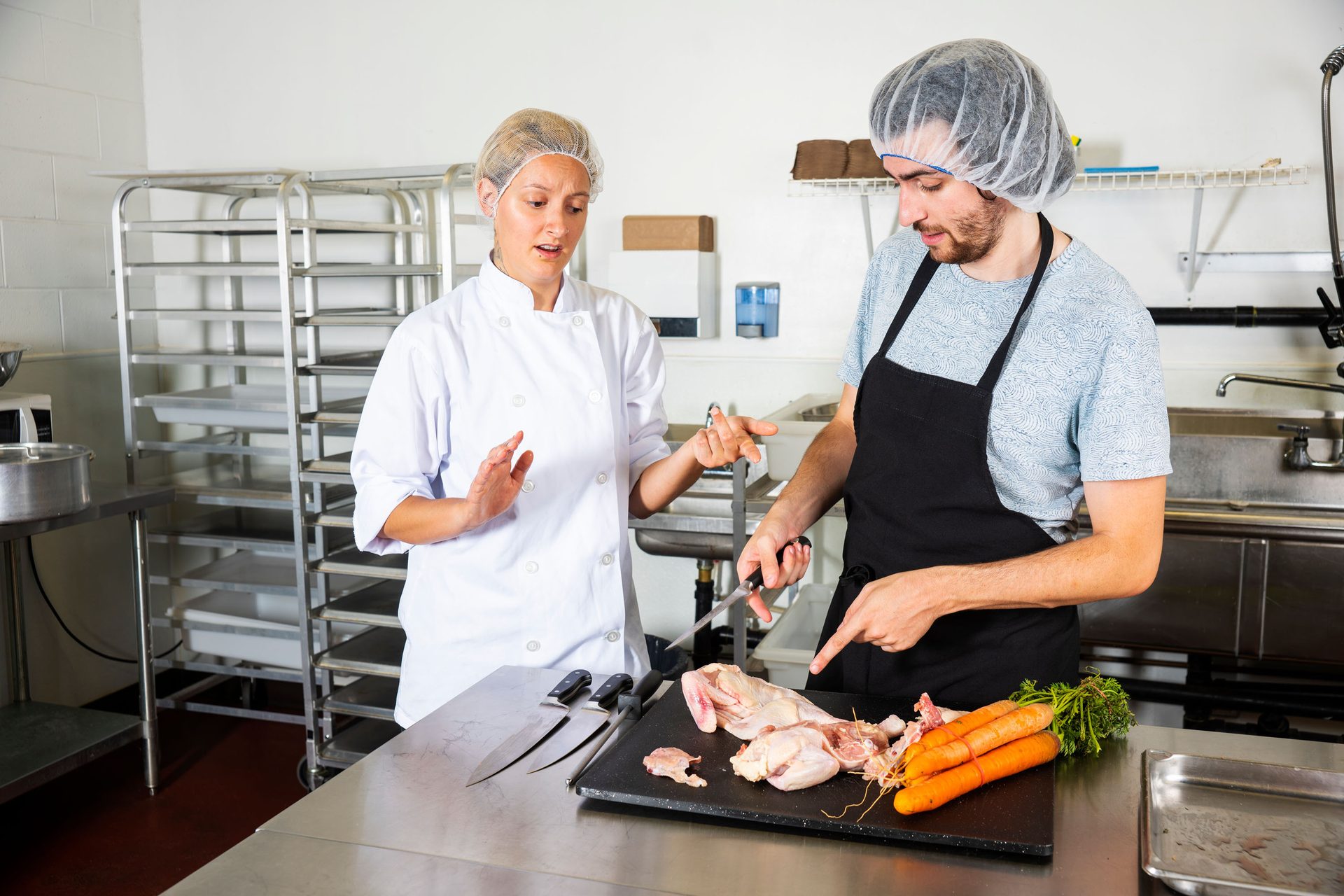
Making these behaviors explicit and contextualizing them in a specific food production system helps everyone understand what good decisions look like in practice, reinforcing a culture where safe, risk-aware decisions are the norm (Figure 2).
Culture determines whether people feel safe to think, question, and act. In compliance-driven cultures, deviations are hidden and decisions are defensive. In mature cultures, issues are surfaced early and treated as opportunities to learn.
Food safety culture maturity is ultimately a reflection of how well an organization supports good decisions, not how strictly it enforces rules.
FIGURE 2. Contextualizing food safety behaviors in a specific food production system helps everyone understand what good decisions look like in practice, reinforcing a culture where safe, risk-aware decisions are the norm (Image credit: iStock / Getty Images Plus / Fertnig)
Case Study: Decisions in Action
An Australian consultancy assisted a client with challenges related to the shelf life of ready-to-cook fish. The product had been validated two years earlier, with no issues until the previous 12 months, when high total plate count and out-of-specification Enterobacteriaceae levels increased.
A review of operations identified no raw material or equipment failures. Cleaning met visual and microbiological standards. However, observation of employees revealed poor handwashing, excessive product handling, and prolonged glove use—outcomes of training that focused on procedures rather than decision-making.
The underlying causes were insufficient, compliance-driven training, compounded over time by staff turnover and the gradual dilution of capability. A "business-as-usual" culture.
The response, a three-month holistic program, focused on:
- Boardroom training
- Observing decisions on the job
- Coaching hygiene and handling practices
- Prioritizing behaviors with the highest food safety impact
- Peer feedback and shared accountability
- Daily reinforcement.
The consultants recommended the client undertake a review of all food safety training to move toward competency-based training rather than "ticking-the-box" compliance. Outcomes of the three-month program and training review included improved food safety, restored shelf life, reductions in staff turnover, improved worker health and safety, sustained behavioral change, improved culture, and estimated annual savings of $230,000 AUS, with QA moving from auditor to strategic partner.
What This Means for the Food Supply Chain
If our earlier articles highlighted the problem, then this article clarifies the solution. Safe food is not produced by audits alone. It is produced by capable people making good decisions in supportive systems and workplace settings. This requires:
- Decision-focused training
- Risk-based prioritization
- QA operating as a strategic partner
- Leadership reinforcing critical thinking, not just compliance
- Culture that supports learning and accountability.
“AI can support better decision-making by providing valuable data and insights, but it does not replace human judgment.”
Decision Ownership in an AI-Supported World
As organizations increasingly adopt digital tools, automation, and artificial intelligence (AI)-driven insights, there is a growing risk of confusing information with judgment. Technology can identify patterns and deviations and support analysis, but it cannot replace accountability for decisions.
Recent, high-profile cases outside of the food industry emphasize this risk. In Australia, several high-profile attorneys (a solicitor and two barristers, with one a King's Counsel) were required to explain to the Federal Court of Australia why submissions contained erroneous citations generated using AI. The judgment made it clear that reliance on AI without appropriate professional oversight led directly to incorrect evidence being presented.
A similar risk exists in food safety. AI can inform risk assessments, but it is not contextual enough to recognize behavioral change or challenge assumptions. Risk assessment is not a purely computational task. High-reliability food safety systems are defined not by technological sophistication, but by how well people are trained, supported, and expected to think critically.
AI can support better decision-making by providing valuable data and insights, but it does not replace human judgment. Responsibility for food safety outcomes ultimately remains with those accountable for ensuring food safety.
Conclusion: From Compliance to Capability
Audit-ready systems can create a false sense of control. Compliance alone does not make food safer; better-informed decisions do. When organizations shift their focus from rules to decision-making, from compliance to capability, and from QA as verifier to QA as strategic partner, food safety performance improves—and those improvements endure.
The question for leaders is no longer whether people know the rules. It is whether the system equips them to make the right decisions when it matters most. Safe food is not the result of perfect compliance—it is the result of making the right decisions, every time.
Acknowledgment
This work was supported in part by a grant from Dairy Management Inc. to Abby Snyder, Ph.D.
References
- Food Safety Magazine Editorial Team. "FAO: Human Oversight Remains Critical in Using AI for Food Safety Foresight." Food Safety Magazine. January 1, 2026. https://www.food-safety.com/articles/11013-fao-human-oversight-remains-critical-in-using-ai-for-food-safety-foresight.
- McKinsey & Company. "What is Decision Making?" March 13, 2023. https://www.mckinsey.com/featured-insights/mckinsey-explainers/what-is-decision-making.
- See the W. Edwards Deming Institute. https://deming.org/.
- Anderson, L.W. and D.R. Krathwohl. A Taxonomy for Learning, Teaching, and Assessing: A Revision of Bloom's Taxonomy of Educational Objectives. New York: Longman Academic Series, Pearson, 2001.
- Bloom, B.S. Taxonomy of Educational Objectives: The Classification of Educational Goals. New York: D. McKay Co., 1956.
- John Guzewich, M.P.H. "Commentary: The Blind Spot in Food Safety Investigations: Incomplete Root Cause Analysis." LinkedIn post. December 17, 2025. https://www.linkedin.com/posts/john-guzewich-mph-97a881252_commentary-the-blind-spot-in-food-safety-share-7407150507129044992-Kp9S/.
Andrew Thomson is the Director of Think ST Solutions in Adelaide, Australia. He partners with leaders across the food supply chain to lift food safety performance and shape high-performing teams. His background spans food regulation, policy, food safety, quality assurance, executive leadership, and workplace learning. As a Tutor at Adelaide University, Andrew is dedicated to developing future quality assurance capability through practical, evidence-informed learning. He has presented at conferences in Australia and New Zealand and contributed as an author to Food Safety Magazine. He is also a member of the Australian Institute of Training and Development.
Matthew Wilson, Ph.D. is a Senior Lecturer in the School of Agriculture, Food, and Wine at Adelaide University in Australia. He has a diverse research background in food quality and preservation, horticulture, new crop development, plant physiology, and sustainability. Dr. Wilson has over 10 years of experience exploring the intersection between the environmental conditions influencing primary production and the resulting influences on food chemistry and sensory perception. This has led to an acute understanding of the factors determining food quality, as measured by microbiological, instrumental, and human-based means. As an education specialist, Dr. Wilson teaches in the Food and Nutrition Science program and is part of the Haide College teaching team. He teaches and assists with the development and delivery of several undergraduate and postgraduate courses.