
Fostering a Culture of Continuous Improvement by Staying 'Audit Ready' Year-Round
SCROLL
DOWN
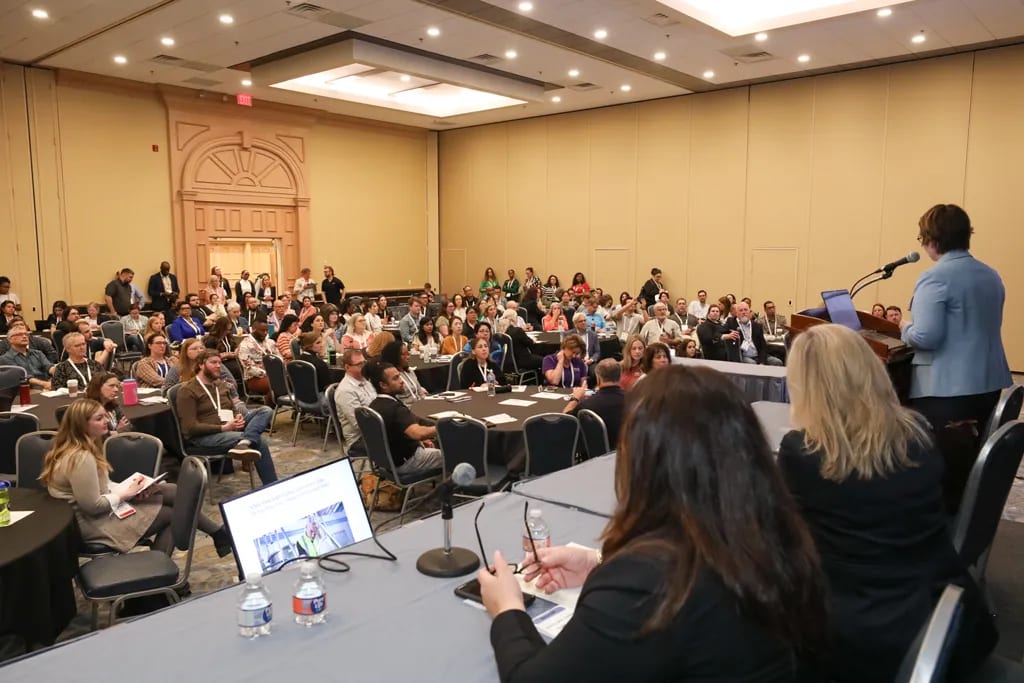
FIGURE 1. The Summit workshops tackle timely topics in food safety in a hands-on, collaborative setting (Image credit: Robert Shiverts Photography and Food Safety Summit)
As is often the case with the Food Safety Summit, held this past May in Rosemont, Illinois, many education sessions closely aligned with the themes explored in Food Safety Magazine. In particular, this issue's cover feature on staying audit-ready year-round—"SQF Audit Not for Another Year—Now What Do You Do?" by Bob Lijana—echoes many of the priorities discussed by executive panelists during a gap assessment session I moderated at the Summit.
In his article, Lijana shares best practices for using existing organizational momentum to drive food safety culture improvement and keep SQF audit scores high. The biggest hurdle to sustained food safety improvement and year-round audit readiness, he writes, is that "'audit work' may be viewed as a distraction from the 'real work' of production and meeting customer needs." This is a paradoxical view because maintaining food safety standards across the supply chain is fundamental to preparing for and passing SQF and other audits.
As Lijana points out, food safety risk management also supports the bottom line by helping companies avoid the costs associated with recalls and outbreaks. "It is a wise senior management team that recognizes how these cost avoidances truly support the bottom line," he emphasizes.
These points were reinforced by panelists Michael Ciepela, Dr. Adeniyi Odugbemi, and Dom Mitial at the Summit's Thursday morning session, "How to Conduct an Unbiased Gap Assessment to Stay Audit Ready." The panelists—hailing from Southern Specialties, Archer Daniels Midland Co., and Goldbergs Group, respectively—discussed how to move beyond the "audit mode" mindset by conducting truly objective gap assessments. The session explored what "audit ready year-round" looks like in practice, focusing on strategies that work in real facilities under real-world constraints. Panelists emphasized that maintaining year-round audit readiness requires reinforcing food safety expectations, promoting accountability, and connecting the "why" of food safety to every role in the organization.
In his article, Lijana also discusses the need for conducting gap assessments to identify areas needing attention and to gather ideas for continual improvement that will reduce risk and better protect public health. "Reflect on when you had to scramble at the last minute to get ready for an SQF audit," he writes. "Pinpoint the root causes and fix them. Many of these are likely to be small gaps in your program that simply did not get addressed in time for the audit."
At the Summit, the panelists further explored the process for identifying and fixing gaps. They discussed how to prioritize which gaps to address first, how to prevent corrective actions from becoming purely "paper fixes," and how to treat a gap assessment as a value-add activity instead of a "box-ticking" exercise. They also emphasized the importance of conducting internal audits to the highest standard, rather than simply mirroring the scheme of an upcoming audit.
“Consistent reinforcement of food safety practices improves engagement on the floor and fosters a culture of sustained improvement that leaders and managers can amplify company-wide.”


Another important takeaway from the session was that maintaining year-round audit readiness depends heavily on organizational culture and frontline employee engagement. The panelists emphasized that audits should not feel like isolated exercises disconnected from frontline workers' day-to-day responsibilities.
Lijana reinforces this in his article, as well. "Gather ideas from frontline employees—i.e., operators, technicians, and their supervisors," he writes. "Open up communication with these employees to understand what could be improved (e.g., what would make their job easier). Make sure they know they are being heard."
The last third of the panel discussion at the Summit was devoted to ongoing improvement. Mitial, Odugbemi, and Ciepiela highlighted the difference between a culture of accountability—what Lijana calls "a culture of vigilance and trust"—versus a "checklist" culture focused on compliance. Consistent reinforcement of food safety practices improves engagement on the floor and fosters a culture of sustained improvement that leaders and managers can amplify company-wide. This is key to shifting from "audit event mode" to continuous readiness—not just for the food safety and quality team but across the organization.
"Good audit scores should be agents of change," Lijana writes. "An ongoing focus on food safety practices and procedures has the wonderful side effect of integrating 'audit work' with 'real work.' They become one and the same. This is the real story behind 'being audit-ready at all times.'"
This comparison of the ideas discussed in the "Gap Assessment" Summit session and this issue's cover feature is just one of many synergies I could highlight from this year's Summit and Food Safety Magazine content. The forward-thinking, science-based solutions offered in this publication, and through all our content channels, mirror the unrivaled guidance and top-tier expertise available at the Food Safety Summit every year.
I hope you enjoy this issue's cover story, and please save the date for the next Food Safety Summit, returning to the Donald E. Stephens Convention Center in Rosemont on May 10–13, 2027. We look forward to welcoming you for another year of insightful discussions, expert perspectives, and practical strategies to strengthen food safety culture and support continuous improvement across your organization.
See you there,
Adrienne Blume, M.A.
Editorial Director

References
- Food Safety Matters Podcast. "Ep. 208. Reviewing 2025—A Year of Change for Food Safety Policy." Food Safety Magazine. December 23, 2025. https://www.food-safety.com/articles/10994-ep-208-reviewing-2025a-year-of-change-for-food-safety-policy.
- Henderson, B. "51 Cases of Infant Botulism Dating Back to 2023 Now Included in ByHeart Outbreak." Food Safety Magazine. December 10, 2025. https://www.food-safety.com/articles/10959-51-cases-of-infant-botulism-dating-back-to-2023-now-included-in-byheart-outbreak.
- Food Safety Matters Podcast. "Ep. 209. Helena Bottemiller Evich: The MAHA Effect on American Food Policy." Food Safety Magazine. January 13, 2026. https://www.food-safety.com/articles/11031-ep-209-helena-bottemiller-evich-the-maha-effect-on-american-food-policy.
- Henderson, B. and A. Blume. "A 2025 Timeline of U.S. Federal Food Safety Changes Under the Trump Admin." Food Safety Magazine. December 26, 2025. https://www.food-safety.com/articles/11004-a-2025-timeline-of-us-federal-food-safety-changes-under-the-trump-admin.
- Henderson, B. "Coalition Urges RFK Jr. to Fix Infant Formula Oversight Problems that Allowed Infant Botulism Outbreak." Food Safety Magazine. December 9, 2025. https://www.food-safety.com/articles/10946-coalition-urges-rfk-jr-to-fix-infant-formula-oversight-problems-that-allowed-infant-botulism-outbreak.
- Henderson, B. "Senator Demands Answers from ByHeart About Infant Formula Botulism Outbreak." Food Safety Magazine. December 23, 2025. https://www.food-safety.com/articles/11009-senator-demands-answers-from-byheart-about-infant-formula-botulism-outbreak.
- U.S. Food and Drug Administration (FDA). "HHS, FDA Announce Operation Stork Speed to Expand Options for Safe, Reliable, and Nutritious Infant Formula for American Families." March 18, 2025. https://www.fda.gov/news-events/press-announcements/hhs-fda-announce-operation-stork-speed-expand-options-safe-reliable-and-nutritious-infant-formula.
- FDA. "Closer to Zero: Reducing Childhood Exposure to Contaminants from Foods." Content current as of January 6, 2025. https://www.fda.gov/food/environmental-contaminants-food/closer-zero-reducing-childhood-exposure-contaminants-foods.
- Henderson, B. "FDA's Developing Rule to Tighten GRAS Oversight Moves to White House." Food Safety Magazine. December 2, 2025. https://www.food-safety.com/articles/10918-fdas-developing-rule-to-tighten-gras-oversight-moves-to-white-house.
- Abrams, S.A., J. Thomas Brenna, R. Clemens, et al. "FDA Expert Panel on Infant Formula 'Operation Stork Speed' June 2025: Part 2, Regulatory and Safety Considerations." Advances in Nutrition (January 12, 2026): 100584. https://advances.nutrition.org/article/S2161-8313(25)00222-4/fulltext.
- Food Safety Magazine Editorial Team. "Regan-Udall Report Supports FDA Infant Formula Safety Efforts." Food Safety Magazine. November 11, 2025. https://www.food-safety.com/articles/10866-regan-udall-report-supports-fda-infant-formula-safety-efforts.
- Reagan-Udall Foundation for the FDA. "Infant Formula Roundtable Series: Report on Cross-Sector Stakeholder Insights." October 2025. https://reaganudall.org/sites/default/files/2025-10/Infant_Formula_Roundtable_Series_Report.pdf.