COVER STORY
SQF Audit Not for Another Year—Now What Do You Do?
How to use existing organizational momentum to drive food safety culture improvement and keep audit scores high
SCROLL DOWN
Video credit: andresr/Creatas Video via Getty Images
By Bob Lijana, M.Sc., Food Safety Consultant
Success! You have just had a great SQF audit, and the entire company is happy. Well done!
Now what?
It is very possible that the company wants to relax and celebrate. Even the food safety and quality assurance (FSQA) team may want to relax. This may be especially well-deserved if the audit score was quite high. Hence, everyone may now want to focus on the production work of getting cases out the door. The next SQF audit is a year away, so there is plenty of time to prepare for that one.
But beware: resting on your proverbial laurels can result in a lower SQF score next year!
This article shares best practices for using existing organizational momentum to drive food safety culture improvement and keep audit scores high. It also suggests ways to cast a wide net to gather ideas for continual improvement that will reduce risk and better protect public health. It is all about being honest.
Why Focus on Food Safety Improvement May Drop Off After an SQF Audit
The tyranny of the "urgent" disappears once an audit is finished. It is human nature to postpone, especially when the actions are not immediately needed (e.g., an audit next week). Some common excuses that get in the way of continuous food safety improvement and being audit-ready at all times include:
- The number-one reason: "audit work" may be viewed as a distraction from the "real work" of production and meeting customer needs. Typically, production is king except during the week of an audit.
- It costs real money, with no apparent immediate benefit to the bottom line. This is a corollary to excuse number one in that food safety work does not appear to earn the company any money.
- The company's culture is immature and does not recognize its psychosocial risks.1 This usually means employee behaviors will drift off-track without ongoing support.
- There is a lack of continuity because of staff turnover.
- No one except the FSQA team wants to take accountability for food safety audits.
- Recognition of the real benefits of food safety improvement is not widespread.
There are many other reasons why companies avoid improving their food safety practices on an ongoing basis. It is possible that many companies do not even recognize the excuses—they just move on to making product.
The Business Case for Continuous Improvement
Excellent food safety risk management helps the bottom line. This is usually quantified by the costs of recalls, withdrawals, and public health emergencies. Unsafe food generates many costs. From Khalid:2 "These costs arise from both the immediate impacts of foodborne illnesses and the long-term consequences on public health, productivity, and economic well-being."
It is a wise senior management team that recognizes how these cost avoidances truly support the bottom line.
In addition, continuous improvement in food safety practices, procedures, and culture increases risk awareness and, therefore, risk management (Figure 1). This, in turn, has a direct consequence of increasing improvement of overall quality. Companies often quantify this effect by reduced cost of issues related to poor quality. An article by Ahamadeen3 notes that this type of continuous improvement is "indispensable" for reasons including safeguarding consumer health, enhancing brand reputation and consumer trust, cultivating a culture of vigilance and trust, and elevating quality standards.
FIGURE 1. Continuous improvement in food safety practices, procedures, and culture increases risk awareness and, therefore, risk management (Image credit: Getty Images / E+ / simonkr)

Note that the SQF Code requires continuous improvement. The company can lose audit points by not paying attention to the Code, as outlined in the section on "Continuous Improvement" in SQF Edition 9:4
- 2.1.1.1.iii: Establish and continually improve the site's food safety management system
- 2.1.1.7: Ensure the integrity and continued operation of the food safety system in the event of organizational or personnel changes
- 2.1.2.2: The SQF practitioner shall update senior site management on at least a monthly basis
- 2.5.4.3: Regular inspections of the site and equipment shall be planned and carried out.
The requirement for continual improvement is consistent across Global Food Safety Initiative (GFSI) schemes, including BRCGS and ISO22000. It is not just an SQF requirement.
The SQF Code also requires that senior management establish and maintain a food safety culture within the site (SQF Edition 9, 2.1.1.ii). Edition 10 of the SQF Food Safety Code,5 released in March 2026, has an even greater focus on culture. If being SQF-certified is important to the company, then it is by definition important to the business, and vice versa.
Call to Action
You have convinced yourself and your colleagues that being audit-ready at all times is important, that continuing to work on audit-related items is important, and that continually improving food safety and quality systems is important.
How do you get started on what comes next? How do you figure out what to work on, what to invest in, and how to direct your teams? How do you take advantage of current strengths and the good things that are already being done as corroborated by the SQF audit?
The next sections provide some useful steps to meet those goals. They include how and where to gather ideas about what to work on; how to translate these into tangible, tactical actions; and how to use a strategic analysis to identify sustainable solutions to food safety issues.
"Have one-on-one conversations with key stakeholders to identify what is important to them. Use these conversations as opportunities to communicate what the SQF process can really do."


Idea Gathering
It is time to be divergent; perhaps a bit rebellious. The audit is complete, and the next one is a year away. Now you have time to assemble ideas for continual improvement. What follows are six ways to gather ideas very quickly on what should be attacked now that the audit is complete. This is not the time to take quick action just to get things done. Instead, this is a jumping-off point to gather ideas that can be assessed for priority-setting and action-taking.
Talk with Stakeholders
Key stakeholders include the owners, the CEO, senior managers, your colleagues, and your boss. Have one-on-one conversations with each to identify what is important to them. Use these conversations as opportunities to communicate what the SQF process can really do.
This work is not just "checking boxes" for some rules. Rather, the work affects public health, the company's reputation, and customer trust, and as mentioned above, significantly helps with risk management and lowering the "cost of quality."
Gather Ideas From Frontline Employees
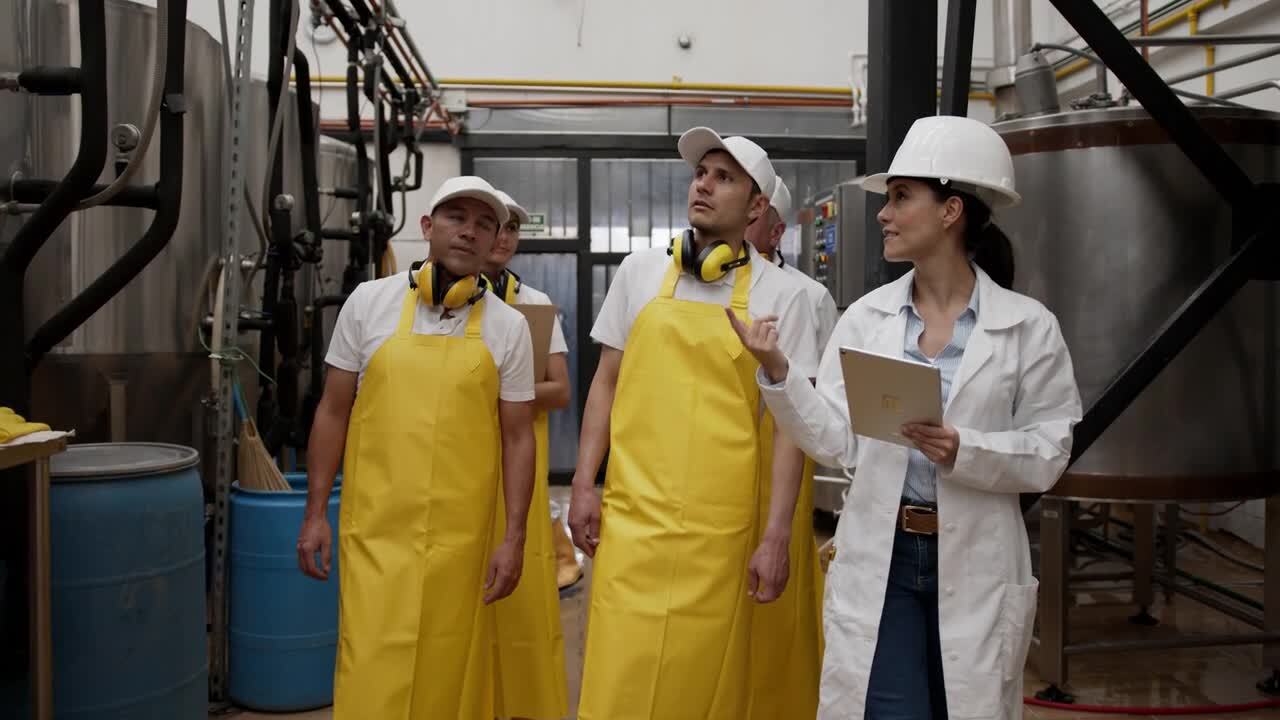
These are the people on the production floor—i.e., operators, technicians, and their supervisors. You should spend time with them, not to criticize but to acknowledge, learn, and credit (Figure 2). Open up communication with these employees to understand what could be improved (e.g., what would make their job easier). Make sure they know they are being heard. Hold one-on-one meetings with the supervisors. Give out gift cards or free lunches as ways to encourage the sharing of ideas.
FIGURE 2. Spend time with people on the production floor (operators, technicians, and supervisors) to acknowledge, learn, and credit (Image credit: Getty Images / E+ / BugTiger)

Review Past Audit Reports
This includes prior SQF (or similar) reports, audits/inspections from the U.S. Food and Drug Administration (FDA) and the state, and audits from your customers. What patterns might have been missed that need a systemic improvement? Are there any root causes that might have been missed? Was anything hidden from the auditors that should be addressed? Now is a great time for the company to be brutally honest with itself.
Identify the 'Scramble' Moments
Reflect on when you had to scramble at the last minute to get ready for an SQF audit. Also identify when and where you had to scramble during the audit. Pinpoint the root causes and fix them. Many of these are likely to be small gaps in your program that simply did not get addressed in time for the audit. Fix them now, and systemically.
Hire an Independent Auditor/Consultant
There is nothing like having a fresh pair of eyes to look at policies, procedures, and practices to create a risk assessment with no strings attached.
Trust Your Instincts
Very important and often underestimated—check in with your own instincts. These are strongly built on experience and knowledge. What are the top three things that you know must get done, whether or not they appear on any of the lists generated so far?
Given that you now have many ideas to attack, take time to group the ideas and set priorities on them. Identify the business impact so that the tasks and ideas remain front-and-center with management. Some of the business cases will include direct bottom-line impact (e.g., increases in efficiency), while others will positively impact food safety culture with its attendant benefits, as discussed above.
Tactical Actions
Take all the ideas, within their respective contexts, priorities, and value to the business, and put them into action steps. Outlined below are five suggestions to get this done.
Separate Quality From Food Safety
One of the first things to do is to separate needs for quality improvements from needs for food safety improvements. They are related, of course, since they both stem from the company's culture and both relate to the pedigree of the food products. However, related ideas could have different priorities depending on whether the company has bigger gaps in quality (i.e., risks) as compared to food safety.
"Take a hard look at what really needs to be done to ensure that a nonconformance will not and cannot be repeated. This is very important, and it is so often overlooked."
Own What You Committed to During the Audit
Look at the corrective actions report that was sent to the certifying body. If the commitments and corrective actions were the kinds of items that are usually one-offs, or that can be corrected with some simple infrastructure fixes, then you may not have much additional work to do on these nonconformances.
On the other hand, if the commitments require substantive changes to documentation or actual systemic changes, then they will not be solved via a one-time corrective action report. These commitments will be looked at during the next audit, and it is too risky to assume the associated issues will not reoccur without lasting systemic change.
This type of change takes time. An article6 on "rings of defense" provides a useful framework to distinguish the categories of corrective actions.
Put 'No-Repeat' Programs in Place
Review the minor nonconformances from the last SQF audit. Perhaps you short-changed the corrective actions to get the audit finalized and your certificate issued. This is very common.
Now, though, you need to take a hard look at what really needs to be done to ensure that a nonconformance will not and cannot be repeated. This is very important, and it is so often overlooked. This step is especially easy to skip when the nonconformances are quite "minor."
Look Critically at SOPs
Even though they were just reviewed in the audit, many SOPs will have been missed (e.g., the auditor did not ask) or were only cursorily reviewed. Which ones really need to be improved to more accurately reflect current practices or to improve them? Just because the auditor did not catch the fact that some steps are out of sequence or are not accurate does not mean you should leave the SOPs alone. Fix them. Delegate this work to the frontline team.
Review Your Checklists
An article on the advantages and disadvantages of checklists notes that "checklists can drive a tyranny of the urgent, i.e., simply checking a box to be done with it."7 Checklists need to have items that are dictated by food safety risks (Figure 3). They also need to force an honest look at procedures and behaviors.
Proactively review the checklists that are used for internal audits. Are the items really catching the right behaviors? Assuming that existing checklists are sufficient can be an insidious way to drive failure.
FIGURE 3. Checklists need to have items that are dictated by food safety risks (Image credit: Getty Images / E+ / freemixer)

Strategic Actions
You have a plan looking out many months. As you get moving on these items, raise your strategic thinking. See what can be done systemically to improve the company's odds of success. This includes moving the food safety culture forward and setting it up for continuous improvement. Outlined below are seven pointers to aid with this type of higher-level, strategic thinking.
Improve the Current FSQA Team
Conduct an honest assessment of how the team performed during the SQF audit. Are some people in the wrong position? Do they understand the importance of the food safety culture of the company? Do new people with different skills need to be added? This is a great time to reassess and update the team, if needed, without the stress of an imminent audit.
The months ahead are also a great time to conduct more training. Build leadership and cross-functional relationships. Additional HACCP and preventive controls knowledge and training are always in order.
Also ensure that there are at least two people who are fully competent at leading audits by the time of the next audit. This will involve investment on the company's part in SQF certifications, HACCP training, and PCQI certifications. There is time to do this, so identify the right people and get them trained.
Improve Risk Management
Take a look at the data coming out of your environmental monitoring program. What are the data really telling you, regardless of what you told the auditor or what the auditor figured out? Have an outside expert look at your data. Conduct a statistical analysis. This analysis might lead to the need for better control of riskier areas (e.g., equipment, sanitation SOPs). The analysis might also allow you to reduce overall sampling to decrease costs.
Separately, look honestly at your pre-operational program, SOPs, and sanitation effectiveness. It could be that improvements are needed to head off recurring problems.
Improve Food Safety Culture
Culture is often defined as the beliefs, norms, and values of the entire company. Sometimes these drivers are very visible, and other times they are quite hidden—yet they still influence behaviors. They should be identified by a cross-functional team that includes senior management and the CEO. What is the culture desired by the company and its customers? What is needed to get there over the long haul?
This is heavy lifting, and it is not as simple as putting in better handwash stations. An improved food safety culture is not just reacting to crises, but doing proactive risk management. This will make the next SQF audit far easier than the last one.
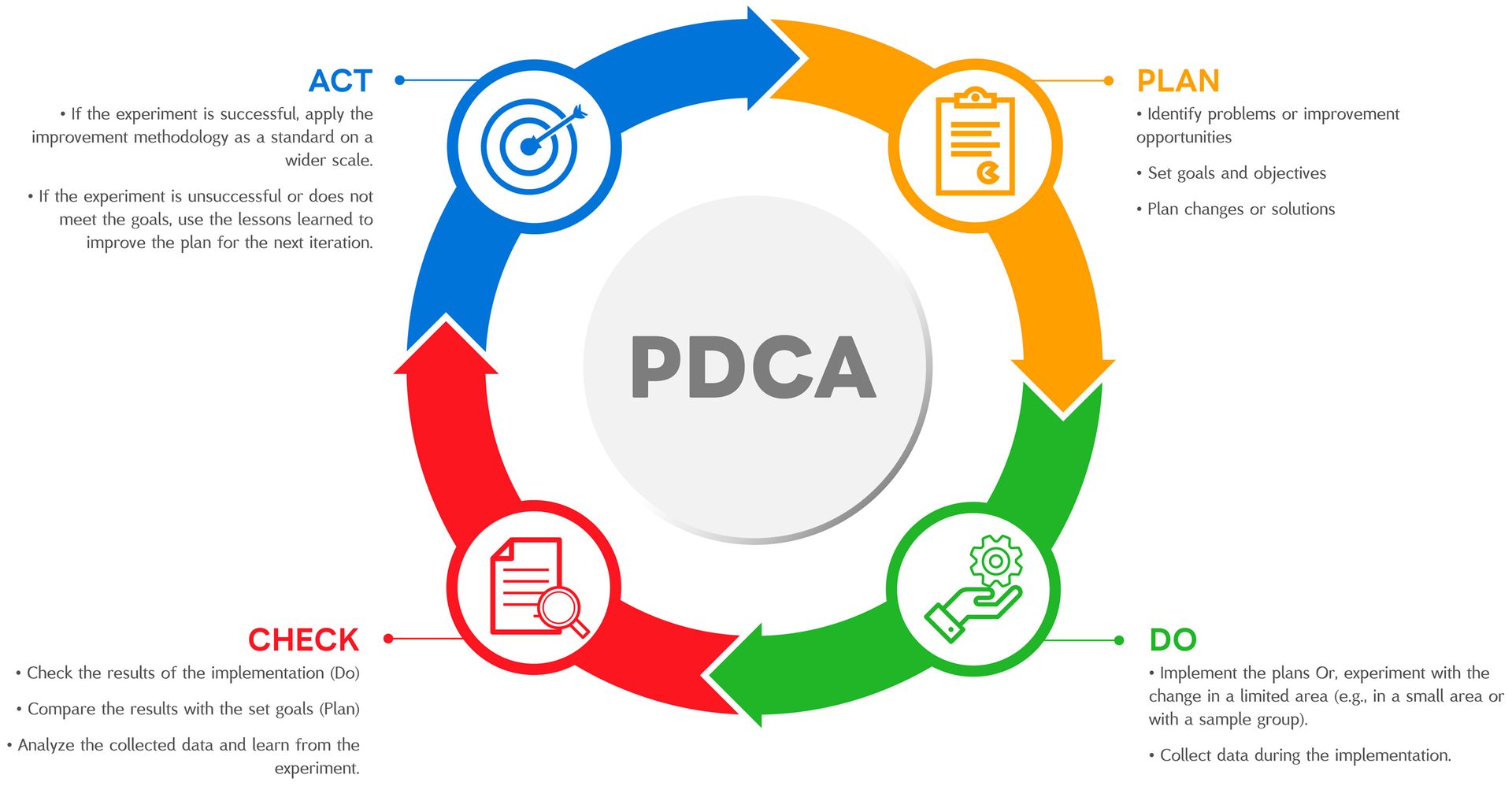
In an article on the importance of changing food safety behaviors, the author wrote, "The SQF process is not an end in itself, but rather a means to an end: sustainable behaviors to ensure the food is safe."8 One of the most useful tools for keeping a focus on long-term continual improvement is the "Plan–Do–Check–Act" (PDCA) cycle (see the PDCA summary by the American Society of Quality9). This cycle was originally envisioned by Deming and colleagues (Figure 4); it is worth understanding and appreciating the use of "study" in the original Deming tool.10
FIGURE 4. The Plan–Do–Check–Act (PDCA) cycle (Image credit: iStock / Getty Images Plus / thailerd)
Improve Physical Infrastructure
There are always areas in a manufacturing plant that need repair. Some of these were likely evident during the audit, whether or not the auditor noticed or cared. Some of the most common areas that need repairs are dock doors and seals, walls, floors, ceiling tiles, equipment (lack of sanitary design), and "temporary" repairs that have been in place for months.
Take care of all of these needed repairs, and work in partnership with your maintenance colleagues to demonstrate the importance and urgency of their ongoing efforts.
Review Common SQF Nonconformances
It is worth noting what problems other food companies have dealt with. Some of the top reasons for nonconformity include:11
- Document control: lack of identification for controlled documents
- Internal audits not being performed
- Hazard analysis: ingredient hazard analysis not completed
- Food safety plan: flow charts missing required information
- Record maintenance: forms not filled out or properly maintained.
Similarly, the SQF Institute has published suggestions for addressing top nonconformances.12 These include prioritizing pest prevention, strengthening the food safety plan, emphasizing cleaning and sanitation, and handling management review and internal audits.
These are all basic food safety requirements. Address them with perfect frankness and thoroughness.
Review Other Audits and Certifications
The company likely has other audits that are part of conducting routine business. These could be organic, Kosher, non-GMO, palm oil certification, gluten-free, forest stewardship, or even OSHA-related inspections.
Take a close look at all of these audits, independent of their primary purpose. Are there opportunities for synergies, piggybacking, and developing an overall perspective on how the company truly operates? This is culture in action.
"Good audit scores should be agents of change."
Review Science Needs
Start some R&D projects that help business profitability, decrease food safety risk, or increase efficiency. The result could be simplified operations and easier SOPs, or an increase in quality. Developing data will also prove extremely useful to decision-making in terms of investments. Some insights from Krishna: "Let's recognize that science is the quiet, diligent guardian of our food. It is careful research into how we can keep our food supply safe with a clear understanding of unseen risks, and the thoughtful and informed use of data for decision-making."13
Practical Tools for Identifying and Evaluating Risk Accurately
- Risk Matrix or Heat Map
Visually plots the probability (likelihood) of an event against its severity (impact). Helps prioritize risks across facilities, systems, or processes. - Failure Mode and Effects Analysis (FMEA)
Systematically evaluates where and how processes could fail, and the consequences if they do. Assigns numerical scores for occurrence, severity, and detection to calculate a risk priority number (RPN). - Historical Incident Data and Complaint Trends
Using actual plant-level or industry-wide data on past recalls, deviations, and consumer complaints can reveal systemic weak points and predict future risk areas. - Environmental Monitoring and Sanitation Validation Data
Provides real-time risk indicators, especially for microbial and allergenic threats, which can be tied to operational decisions (e.g., infrastructure upgrades, cleaning frequencies). - Near-Miss and CAPA Tracking
Formalizes tracking of how near-misses are logged and investigated, while CAPA tracking can expose underestimated or recurring risks that have not yet resulted in a failure, but could. - Insurance Risk Assessments and Underwriter Feedback
Leverage insurer-provided assessments and audit services. These often offer third-party validation of risk exposure from a financial and liability standpoint. - Competitive Failure Benchmarking
Evaluate public recall data and case studies from companies in your category. Understanding how peers have failed—and what it cost them—adds context and credibility to internal ROI arguments.
Takeaway
Good audit scores should be agents of change. When they systemically guide best practices and continual improvement in food safety practices, they lower the company's risk and increase food product safety and quality.
An ongoing focus on food safety practices and procedures has the wonderful side effect of integrating "audit work" with "real work." They become one and the same. This is the real story behind "being audit-ready at all times."
To summarize the best practices shared in this article:
- Quit making excuses
- Gather ideas using some or all of the six idea gathering methods
- Build a tactical plan based on some or all of the five tactical action approaches
- Work cross-functionally and with senior management on the key strategies that everyone can get behind, using some or all of the seven suggested strategic action steps.
The secret ingredient to success in all the steps of this journey is honesty. Being able to look at your operations, successes, and failures with full candor and frankness is critical. This is a trait that all functions and levels must embrace, from the frontline to the CEO.
The best practices described here can feel overwhelming, so take them one at a time. Plan for the long run: the next audit. And the one after that.
Funding Acknowledgment Statement
This article was supported by the U.S. Food and Drug Administration (FDA) of the U.S. Department of Health and Human Services (HHS) as part of a financial assistance award (FAIN) totaling $500,000, with 100 percent of this article funded by FDA/HHS. The contents are those of the authors and do not necessarily represent the official views of, nor an endorsement by, FDA/HHS or the U.S. government.
References
- Jespersen, L. and B. Lijana. "Where Food Safety Culture and Systems Collide: Do You Know Your Company's Psychosocial Risks?" Food Safety Magazine April/May 2024. https://www.food-safety.com/articles/9378-where-food-safety-systems-and-culture-collide-do-you-know-your-companys-psychosocial-risks.
- Khalid, S. "Understanding the Costs of Unsafe Food." FoodSafetyTech. May 13, 2024.
- Ahamadeen, R. "Implementing an Effective Food Quality and Safety Continuous Improvement Program." Food Safety Magazine April/May 2025. https://www.food-safety.com/articles/10306-implementing-an-effective-food-safety-and-quality-continuous-improvement-program.
- SQF. "Food Safety Code: Food Manufacturing, Edition 9." October 2020. https://www.sqfi.com/docs/sqfilibraries/code-documents/edition-9/code-pdfs/20227fmin_foodmanufacturing_v3-2-final-w-links.pdf?sfvrsn=7f70c75a_8.
- SQF. "Food Safety Code: Food Manufacturing, Edition 10." March 2026. https://www.sqfi.com/the-sqf-code/choose-your-code/library-of-codes/food-manufacturing.
- Lijana, B. "Rings of Defense: Justifying and Negotiating Food Safety Actions to Regulators." Food Safety Magazine. October/November 2023. https://www.food-safety.com/articles/8945-rings-of-defense-justifying-and-negotiating-food-safety-actions-to-regulators
- Lijana, B. "Checklists: Useful Tools or Traps?" FoodSafetyTech. February 2024.
- Lijana, B. "Quality, SQF, and the Importance of Changing Food Safety Behaviors." Food Safety Magazine. February/March 2025. https://www.food-safety.com/articles/10123-quality-sqf-and-the-importance-of-changing-food-safety-behaviors.
- The American Society of Quality. "What Is the Plan-Do-Check-Act (PDCA) Cycle?" https://asq.org/quality-resources/pdca-cycle.
- The W. Edwards Deming Institute. "The PDSA Cycle." https://deming.org/explore/pdsa/.
- Food Safety Net Services. "Top 10 Reasons for an SQF Audit Non-Conformity." September 3, 2025. https://fsns.com/top-10-reasons-for-an-sqf-audit-non-conformity-data/.
- SQF Institute. "Strengthening Food Safety: Tackling the Top Non-Conformances in SQF Code Edition 9." July 11, 2023. https://www.sqfi.com/news/blog/view/sqfi-blog/2023/07/11/strengthening-food-safety--tackling-the-top-non-conformances-in-sqf-code-edition-9.
- Krishna, B. "From Reader to Leader: Your Call to Action for Food Safety." LinkedIn post. June 7, 2025. https://www.linkedin.com/pulse/from-reader-leader-your-call-action-food-safety-bobby-krishna-s4vff/.
Bob Lijana, M.Sc. has held director- and vice president-level positions in food safety, quality, and operations for over 35 years at companies producing ready-to-eat foods, prepared meals, and pasteurized juices. He holds B.Sc. and an M.Sc. degrees in chemical engineering from the Massachusetts Institute of Technology and the University of California–Berkeley, respectively.