CULTURE
Building Food Safety Culture Through Real Skills on the Floor
If a food safety culture is strong, it should be reflected in the workforce's capability and operational discipline
By Andrew Thomson, Director, Think ST Solutions and Matthew Wilson, Ph.D., Senior Lecturer, Adelaide University
SCROLL DOWN
Video credit: Hispanolistic/Vetta via Getty Images
> SPOtliGHT
Food safety decisions reflect organizational priorities. When workforce capability receives limited attention, it raises broader questions about leadership commitment to protecting both employees and consumers. Building a strong food safety culture requires more than policies and audits—it requires sustained investment in the people responsible for providing safe food every day.
Food Safety Culture: Where Does Workforce Capability Fit?
Food safety culture is a fashionable topic right now. It is widely discussed at conferences, workshops, and on social media platforms. These conversations have helped raise awareness of key concepts such as leadership commitment and shared values. Some leaders are responding by asking practical questions about capability and performance, while others are leaving it on the back burner.
In a recent survey1,2 reported by Food Safety Magazine, more than 170 food processors worldwide were asked about their organization's food safety culture. Encouragingly, 76 per cent of respondents indicated that their company has a good food safety culture.
When asked about the key performance indicators they monitor and report on, respondents identified measures such as environmental monitoring results, customer complaints, sanitation scores, HACCP and GMP deviations, and corrective action closure rates. These are all important indicators of food safety system performance.
However, the results also raise an important question: Where does training fit into building a strong food safety culture? While many food operations invest heavily in food safety training and other learning programs, the effectiveness of these efforts is rarely measured in terms of operational capability and whether employees can consistently apply food safety knowledge and skills in daily practice.
Several respondents also noted that food safety culture metrics are frequently set and tracked at the corporate level, with limited visibility at the plant level. This disconnect can make it difficult for organizations to assess whether food safety training is translating into improved performance where it matters most—in daily operations. When knowledge is not consistently translated into practical capability, errors and process deviations become more likely.
The authors' previous articles have explored the broader foundations of workforce capability in food safety. "Building a Skilled and Capable Workforce in the Food Industry"3 highlighted the need for the industry to move beyond superficial compliance and focus on genuine competence. "Competence, Not Compliance Should Drive Food Safety"4 examined how food businesses must focus on identifying and managing risks within their specific production or kitchen environments. "The Business Case for Building Food Safety Skills"5 outlined how investing in workforce capability can strengthen resilience, reduce risk, and support long-term competitiveness.
Building on these ideas, this article shifts the focus from concept to practice. It examines what companies around the world are doing to strengthen food safety skills, close capability gaps, and ensure that food safety expectations are consistently applied on the floor. Here, we offer pragmatic approaches and useful insights by focusing on an overlooked dimension of food safety culture: workforce capability and the application of food safety skills in daily practice.
Rather than treating culture as an abstract concept, we examine how leadership priorities, trust, accountability, and operational systems create the environmental conditions that allow employees to apply food safety skills consistently and effectively. In this way, food business culture becomes the enabler of reliable performance.
This article draws on insights from food industry leaders and consumer advocates who are actively working to strengthen food safety capability in their organizations and communities. The authors are grateful for the contributions of the following individuals who generously shared their perspectives and experiences:
- Kerry Bridges, Vice President of Food Safety at Chipotle
- Dr. Vanessa Coffman, Director of the Alliance to Stop Foodborne Illness
- Adam Wilkinson, HR/WHS Compliance Manager at Fleurieu Milk Company
- Deepak Shukla, CEO of Pearl Lemon Catering
- Jovana Komlenic, Head of Food Safety Culture at FRoSTA
- Kerstin Janson, Head of Quality at FRoSTA.
Their insights across different sectors of the food industry help shape our discussion on how food businesses can move beyond measuring training completion and audit scores, and toward building the practical capability required to deliver safe food.
If a food safety culture is strong, it should be reflected in the workforce's capability and operational discipline, as well as in employees' ability to apply food safety knowledge and skills reliably in daily practice.
One organization that has attempted to adopt this approach is Chipotle, a fast-casual restaurant chain.
Rebuilding Food Safety through Governance and Capability
Kerry Bridges, Vice President of Food Safety at Chipotle, explained that following a series of food safety incidents in 2015, Chipotle invested heavily in strengthening its food safety governance, supply chain relationships, controls, and workforce capability. The company's approach is now frequently cited as an example of how a food business can build food safety systems and embed stronger operational discipline.
The Food Safety Advisory Council provides independent expert guidance, while Chipotle's Board of Directors maintains oversight of food safety governance and performance. This external oversight ensures that food safety is treated as a strategic priority, supported by expert input and continuous improvement. The governance structures signal to employees, suppliers, and customers that food safety is treated as a leadership priority and subject to ongoing scrutiny.
Chipotle recognizes that food safety performance depends not only on documented procedures but also on the capability of employees throughout the operation to apply them consistently.
“Food safety culture becomes operational when organizations invest in workforce capability and create the conditions that enable employees to apply food safety skills consistently in daily practice.”
Within restaurant operations, the development of food safety capability begins during onboarding. New employees receive structured training that introduces both operational procedures and the food safety principles that underpin them. Importantly, Chipotle recognizes that learning does not occur solely through formal instruction. Practical capability is built through daily routines, supervision, and the consistent reinforcement of food safety expectations on the floor.
New team members participate in shoulder-to-shoulder training, working alongside experienced food safety leaders initially. This approach allows employees to observe tasks being performed correctly, practice them in real operational settings, and receive immediate feedback while carrying out their responsibilities.
By combining structured, on-the-job learning with coaching and supervision, Chipotle reinforces food safety expectations during daily operations. This helps ensure that employees not only understand food safety requirements but also apply them consistently on the job, every day. It also demonstrates to employees that food safety expectations are actively supported in day-to-day operations, not simply outlined in training materials.
Chipotle also focuses on preventing one of the most common sources of foodborne illness: employees working while unwell. At the start of each shift, the designated Food Safety Leader conducts and documents a wellness check with every team member before they begin work in the kitchen. Employees must confirm that they are free from symptoms such as vomiting, diarrhea, or nausea, consistent with U.S. Food and Drug Administration (FDA) guidelines. Visitors entering food preparation areas are also subject to the same checks. Employees who report illness can consult with trained nurses to determine whether they should be excluded from work, with paid leave available to support appropriate decisions.
Chipotle has also invested heavily in workforce capability through structured training and certification programs. Restaurant managers are required to complete ServSafe food safety certification, while Field Leaders responsible for overseeing multiple restaurants receive additional training in HACCP systems certified by the International HACCP Alliance. These leaders must demonstrate the ability to develop HACCP plans and oversee their effective implementation.
Food safety training is reinforced through quarterly sessions for all restaurant employees. These sessions focus on the company's "Food Safety Seven," a set of practical principles covering employee health, hygiene, produce handling, temperature control, sanitation, and escalation of potential issues. By reinforcing these expectations regularly, Chipotle aims to ensure that food safety knowledge is translated into consistent, day-to-day practice across its restaurants.
These practices illustrate how food safety culture becomes operational when organizations invest in workforce capability and create the conditions that enable employees to apply food safety skills consistently in daily practice.
While these operational systems illustrate how one company is attempting to embed food safety capability across its operations, consumer advocates emphasize that the ultimate test of food safety culture lies in how effectively these expectations are translated into daily practice.
Consumer Advocates for Better Food Safety Culture
Vanessa Coffman, Ph.D. from the Alliance to Stop Foodborne Illness acknowledges that while the specific technical skills required in food businesses may vary by sector, one factor remains constant: the need for a strong and positive food safety culture, supported by capable people. This includes individuals who can assess the state of food safety culture within their organization, communicate clear expectations for safe practices, and continually work to strengthen these practices.
Importantly, when employees are equipped with the right skills and supported to apply them consistently, organizations are far more likely to prevent foodborne illness and protect consumers.
When employees develop a sense of ownership rather than simply complying with requirements, this reinforces a strong food safety culture (Figure 1). Dr. Coffman highlights that when employees understand how their actions influence food safety outcomes, safe behaviors become more consistent and sustainable.
FIGURE 1. When employees develop a sense of ownership rather than simply complying with requirements, this reinforces a strong food safety culture (Image credit: Getty Images / E+ / Scandistock)
Identifying skills gaps early is another critical capability of high-performing organizations. According to Dr. Coffman, strong food businesses do not assume their systems are perfect. Instead, they expect that knowledge and capability gaps will exist and put mechanisms in place to identify them before they lead to food safety incidents.
While surveys and formal assessments can provide useful information, she notes that some of the most valuable insights come from direct conversations with employees. Asking employees how and why they perform particular tasks can reveal whether procedures are truly understood. When the response is "Because I have to," it often signals an opportunity to strengthen understanding of how individual roles contribute to food safety and public health.
Dr. Coffman also cautions that training alone rarely leads to lasting improvements in performance. Without reinforcement, much of what is learned in formal training quickly fades. One way to address this challenge is to clearly explain the reasons behind food safety expectations. When employees understand the consequences of food safety failures, the learning becomes far more meaningful.
Stories and case studies illustrating the impact of foodborne illness can be particularly powerful. These examples help employees connect their day-to-day tasks with the potential consequences for consumers, creating the "aha" moments that move learning beyond compliance toward genuine engagement.
Embedding food safety skills into daily work is equally important. Dr. Coffman stresses that organizations must integrate food safety into their core operating values rather than treating it as an additional task. Production pressures, labor shortages, and time constraints are unlikely to disappear. In these situations, leaders must be prepared to make difficult decisions, including slowing or stopping production when food cannot be produced safely.
Leadership behavior plays a critical role in reinforcing expectations. When leaders are visible on the production floor and consistently follow food safety procedures themselves, they send a clear message about priorities. As Dr. Coffman notes, employees pay close attention to what leaders do, not just what they say.
Organizations should look beyond traditional metrics when assessing whether food safety capability is improving. While indicators such as complaints, recalls, and audit findings remain important, observable behaviors on the production floor often provide stronger signals of true performance. Employees supporting one another, correcting unsafe practices, and speaking up when something appears wrong are all indicators that food safety skills are being applied in practice.
“Near misses, repeated corrections, and inconsistent checks often revealed capability gaps more quickly than formal audits.”
Finally, Dr. Coffman highlights that actively investing in food safety culture is one of the most effective ways to strengthen workforce capability and improve overall food safety performance. A growing range of practical resources is available to support organisations in this work. STOP Foodborne Illness has developed a series of freely available tools, informed by industry experts and designed to help food businesses take practical steps to strengthen their food safety culture.
Industry Perspectives on Food Safety Skills
Building on these observations, the authors asked food industry leaders a series of questions focused on workforce capability: what food safety skills matter most, how organizations identify skills gaps before they lead to incidents, and what practical approaches help translate knowledge into consistent performance.
The responses highlighted a common theme. While technical knowledge remains important, the consistent application of food safety skills in daily operations depends on a combination of practical competence, leadership support, and organizational systems that reinforce safe behavior.
At South Australia's Fleurieu Milk Company, which received the Dairy Safe Food Safety Culture Award in its second year of competition, Adam Wilkinson, HR/WHS Compliance Manager, stated that the most valuable capabilities combine practical, on-the-job skills with a strong theoretical understanding. Key competencies include food hygiene practices, application of HACCP principles, verification of competencies, root cause analysis, and a solid understanding of microbiological risks. However, he notes that the most critical factor is ensuring that employees understand the reasons behind food safety requirements. When team members understand the "why," they are more likely to adopt consistent behaviors that support risk reduction and strengthen food safety culture.
A similar emphasis on practical competence emerged from Pearl Lemon Catering, a mid-sized catering business delivering corporate events and private functions with a core operational team of around 20 employees across the UK, U.S., and Europe. Chief Executive Deepak Shukla explained that identifying food safety skills gaps required moving beyond assumptions about training effectiveness and observing behavior directly in the workplace. Near misses, repeated corrections, and inconsistent checks often revealed capability gaps more quickly than formal audits. In response, the company replaced traditional annual classroom training with short, task-based refreshers embedded into daily work. Supervisors were also trained and empowered to coach rather than simply enforce compliance, creating an environment where employees were more comfortable reporting issues and seeking improvement.
FRoSTA in Germany is an innovative distributor of frozen foods. Oversight of food safety culture rests with Jovana Komlenic, Head of Food Safety Culture and Kerstin Janson, Head of Quality. They highlighted the importance of situational awareness and cross-functional communication. Employees across all departments are expected to recognize and report deviations quickly, whether related to equipment interruptions, allergen risks, or potential foreign body contamination. Equally important is the ability of the production, quality, and technical teams to communicate effectively and coordinate corrective and preventive actions when issues arise.
Identifying Food Safety Skills Gaps in the Workplace
When asked how organizations identify food safety skills gaps beyond training records and audit results, the leaders we spoke to underlined the importance of direct observation and engagement with employees in the workplace.
At Fleurieu Milk Company, Adam Wilkinson explained that visible quality assurance oversight plays a key role. Regular production floor presence by quality staff, routine GMP inspections, and behavioral observations allow supervisors to identify competency gaps. Non-conformances—whether related to documentation, process deviations, or procedural lapses—often reveal underlying skills issues that require targeted retraining or coaching.
A similar theme emerged at FRoSTA, where teams rely heavily on structured production floor practices to surface capability gaps. Food safety "Gemba walks" encourage leaders to observe hygiene behaviors, ask questions, and engage directly with employees about their work. Daily production floor meetings involving the production, quality, and technical teams also provide an opportunity to discuss emerging issues and align corrective actions quickly. Additional data sources, such as First Time Quality evaluations and hygiene validation through microbiological testing, provide further insight into where processes or employee practices may require improvement.
At Pearl Lemon Catering, Deepak Shukla described how observing operational behavior rather than relying solely on training records helped identify a specific skills gap related to allergen control during event preparation. Although employees had completed formal food safety training, inconsistent glove changes and poor separation of allergen-free preparation areas became evident during busy service periods.
As these industry contributors emphasized, once skills gaps are identified, closing them requires practical, targeted interventions rather than broad, compliance-based training.
Closing Skills Gaps Through Practical Learning
At Fleurieu Milk, Adam Wilkinson explained that closing skills gaps begins with a structured training framework supported by documented verification of competency. Employees follow defined training plans, receive mentoring and supervision, and demonstrate practical competence before being signed off. When employees move to new equipment or production areas, the training process is repeated to ensure capability remains consistent. Importantly, non-conformances are treated as learning opportunities to reinforce skills while maintaining a positive food safety culture.
Deepak Shukla described a similarly practical approach. Instead of returning staff to classroom training, Pearl Lemon Catering introduced short, task-focused refreshers delivered during pre-shift briefings. These "live-fire" exercises simulated real allergen-control scenarios that required supervisors to demonstrate correct practices. Within weeks, the organization observed fewer allergen-related near misses, improved internal audit performance, and increased staff reporting of potential cross-contact risks, an indicator that employees felt more confident speaking up.
“Training programs remain important, but they are most effective when combined with systems that allow organizations to detect capability gaps early and respond with targeted interventions that improve day-to-day performance.”
At FRoSTA, Jovana Komlenic and Kerstin Janson highlighted the importance of building trust and open communication when addressing skills gaps. Frontline leaders encourage regular dialogue and constructive feedback, allowing issues to be addressed early. This approach reflects the type of proactive engagement Dr. Vanessa Coffman highlights as critical for identifying and closing skills gaps—showing how capable leadership, open communication, and on-the-floor observation translate food safety culture into consistent practice. Corrective actions are tailored to the situation: targeted retraining may be provided when specific procedural steps are missed, while broader awareness sessions are used when patterns of incidents emerge across teams. This approach ensures that improvements are sustained through both skill reinforcement and shared learning across the organization.
These examples illustrate that identifying and closing food safety skills gaps requires active leadership, continuous observation, and practical reinforcement of skills in the workplace. Training programs remain important, but they are most effective when combined with systems that allow organizations to detect capability gaps early and respond with targeted interventions that improve day-to-day performance.
Leadership and Food Safety Under Operational Pressure
When asked how frontline leaders and quality assurance teams support the consistent application of food safety skills under operational pressures, contributors highlighted the importance of capable leadership and strong organizational routines.
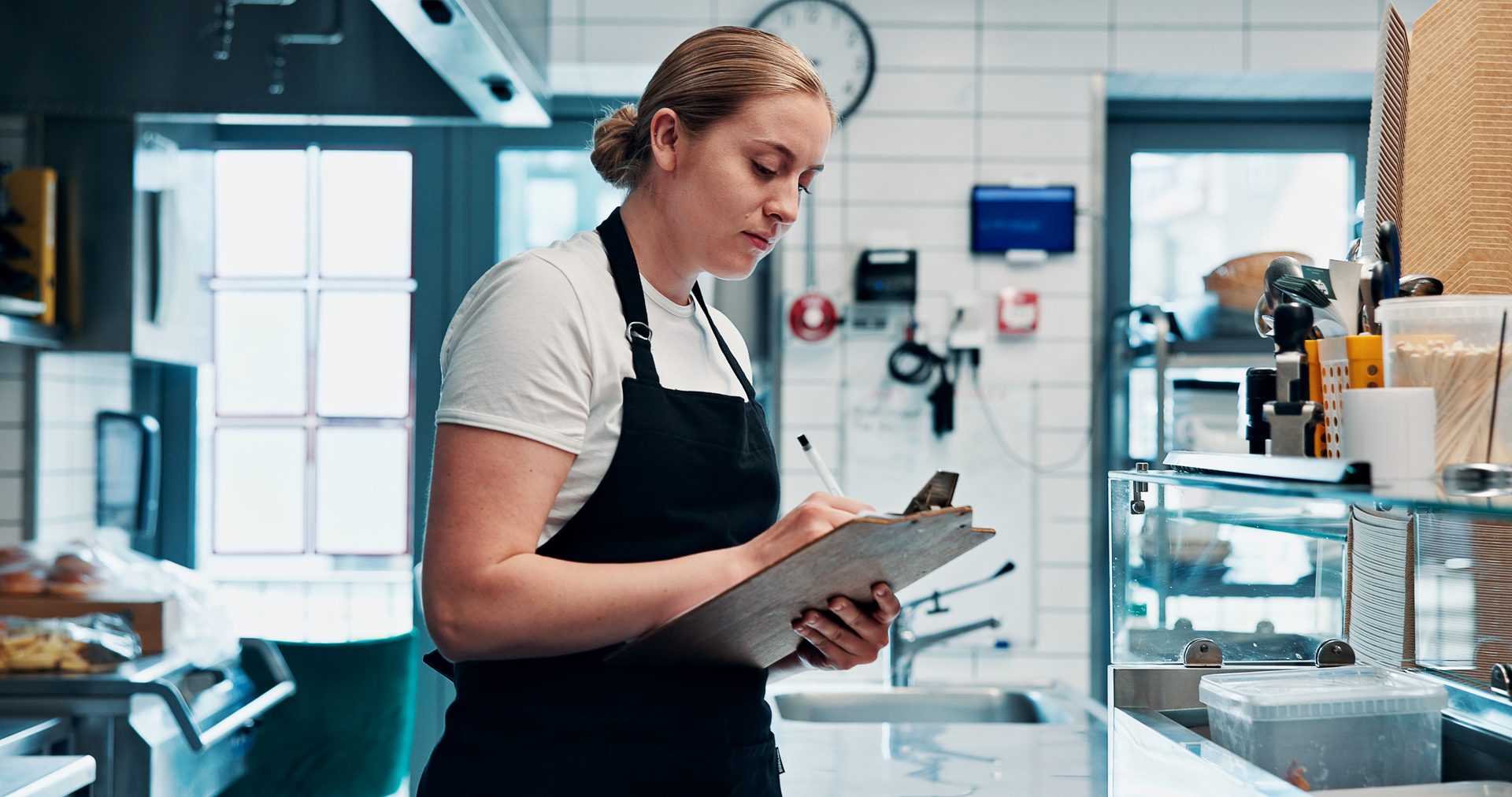
At Fleurieu Milk Company, Adam Wilkinson explained that effective leadership begins with building strong capability among supervisors and quality personnel (Figure 2). Leaders must be multi-skilled and possess a sound understanding of the equipment and processes they oversee. This operational competence enables them to make informed decisions when production pressures increase, without compromising food safety standards.
FIGURE 2. Effective leadership begins with building strong capability among supervisors and quality personnel (Image credit: Getty Images / E+ / Hispanolistic)

Wilkinson also highlighted the importance of using operational data, accurate record-keeping, and regular walk-throughs to maintain visibility of risks. These practices enable leaders and teams to identify emerging issues early and reinforce the correct behaviors across the workforce. Training leaders in food safety culture further strengthens this process by ensuring that they consistently model the right behaviors and reinforce expectations during daily operations. When leaders are present and approachable on the floor, employees can raise concerns or discuss potential issues, rather than feeling they must "knock on a closed door" to be heard.
At FRoSTA, Jovana Komlenic and Kerstin Janson underlined the importance of structured routines and open communication in fostering safe performance. Regular production floor checks, collaboration between departments, and clear operational routines help identify risks early and reinforce correct practices through direct feedback.
FRoSTA has also introduced an open ideas management system that allows employees to submit improvement suggestions at any time. By encouraging participation and dialogue, the system helps strengthen engagement and supports continuous improvement in food safety practices across the organization.
Deepak Shukla of Pearl Lemon Catering says frontline leaders make the biggest difference because they set the tone on the floor. When supervisors consistently model good food safety habits, perform quick checks during service, and actively encourage staff to speak up, those standards become ingrained—even during busy periods.
Quality assurance supports this by keeping training practical, frequent, and closely tied to daily operations. Short, task-focused refreshers, clear visual cues, and real-time feedback are far more effective at reinforcing safe practices than relying solely on formal audits or classroom-based training.
This approach reflects the principles highlighted by Dr. Vanessa Coffman: embedding food safety skills into daily routines, ensuring that leaders model the right behaviors, and creating an environment where employees understand the impact of their actions and feel empowered to raise concerns. By connecting practical supervision with a culture of accountability, organizations strengthen both capability and overall food safety performance.
These examples highlight that maintaining food safety standards under operational pressure depends heavily on leadership capability. When frontline leaders and quality teams possess the right skills, follow clear routines, and use effective communication channels, they can consistently reinforce food safety expectations across the organization, ensuring that safe practices become embedded in daily operations.
“For continuous improvement, businesses should treat food safety as an ongoing conversation.”
Creating a Continuous Improvement Loop
When asked what advice they would offer food businesses seeking to create a continuous improvement loop for food safety skills and performance, contributors pointed to the importance of moving beyond a compliance-only mindset.
At Fleurieu Milk Company, Adam Wilkinson argued that organizations must genuinely invest in their people. Employees need the skills, knowledge, and understanding of why food safety matters if they are to contribute meaningfully to risk reduction and business performance.
Wilkinson also noted that policies and procedures should not exist merely as documents referenced during audits or inspections. Instead, they must function as living tools that guide daily operations. Embedding these expectations into routine practice, reinforcing standards consistently, recognizing positive behaviors, and treating mistakes as opportunities for retraining all contribute to sustained improvement.
At FRoSTA, Jovana Komlenic and Kerstin Janson emphasised the importance of creating an organizational environment that supports learning and openness. Trust, clear values, and strong communication encourage employees to take responsibility, raise concerns, and actively contribute to improving food safety performance.
They also highlighted the role of cross-department collaboration, constructive feedback, and shared learning from both positive and negative examples. When this cultural foundation is established, digital tools, dashboards, and performance indicators can be used effectively to monitor trends, identify emerging issues, and guide targeted improvements.
Deepak Shukla offers this perspective: for continuous improvement, businesses should treat food safety as an ongoing conversation. Leaders should review incidents, ask teams how processes could be improved, and then adjust accordingly. When staff are actively part of this loop, food safety becomes a habit, not just a compliance task.
These perspectives reinforce a key message: continuous improvement in food safety depends on strengthening workforce capability, encouraging open communication, and embedding learning into everyday operations.
From Training to Capability: Strengthening Food Safety Culture
The experiences shared by industry and consumer advocacy leaders in this article reinforce a simple but often overlooked point: food safety culture is ultimately reflected in the capability of the workforce.
While policies, audits, and training programs remain important, they do not on their own ensure safe food. Food businesses that achieve consistent food safety performance focus on strengthening practical skills, observing how work is performed, and supporting employees in applying food safety knowledge during daily operations.
While the approaches may vary to suit the organization, several common themes emerge. Leaders remain visible in operations, skills gaps are identified through observation and operational data, and targeted coaching and task-based training are used to strengthen employee capability.
For food businesses seeking to strengthen food safety culture, the path forward is clear: investing in workforce capability, leadership, and practical learning systems helps ensure that food safety is not simply a compliance activity, but a routine part of everyday decision-making.
Ultimately, a strong food safety culture is not defined by what food businesses say about food safety, but by how consistently employees can apply the right skills in practice.
Acknowledgment
This work was supported in part by a grant from Dairy Management Inc. to Abby Snyder, Ph.D.
References
- Ferguson, B. "What Food Safety KPIs Say About Food Safety Culture—Part 1." Food Safety Magazine December 2025/January 2026. https://www.food-safety.com/articles/10980-what-food-safety-kpis-say-about-food-safety-culturepart-1.
- Ferguson, B. "What Food Safety KPIs Say About Food Safety Culture—Part 2." Food Safety Magazine February/March 2026. https://www.food-safety.com/articles/11208-what-food-safety-kpis-say-about-food-safety-culturepart-2.
- Thomson, A. and M. Wilson. "Building a Skilled and Capable Workforce in the Food Industry." Food Safety Magazine February/March 2025. https://www.food-safety.com/articles/10122-building-a-skilled-and-capable-workforce-in-the-food-industry.
- Thomson, A. "Competence, Not Compliance, Should Drive Food Safety." Food Safety Magazine February 4, 2025. https://www.food-safety.com/articles/10097-competence-not-compliance-should-drive-food-safety.
- Thomson, A. and M. Wilson. "The Business Case for Building Food Safety Skills." Food Safety Magazine October 28, 2024. https://www.food-safety.com/articles/9861-the-business-case-for-building-food-safety-skills.
Andrew Thomson is the Director of Think ST Solutions in Adelaide, Australia. He partners with leaders across the food supply chain to lift food safety performance and shape high-performing teams. His background spans food regulation, policy, food safety, quality assurance, executive leadership, and workplace learning. As a Tutor at Adelaide University, Andrew is dedicated to developing future quality assurance capability through practical, evidence-informed learning. He has presented at conferences in Australia and New Zealand and contributed as an author to Food Safety Magazine. He is also a member of the Australian Institute of Training and Development.
Matthew Wilson, Ph.D. is a Senior Lecturer in the School of Agriculture, Food, and Wine at Adelaide University in Australia. He has a diverse research background in food quality and preservation, horticulture, new crop development, plant physiology, and sustainability. Dr. Wilson has over 10 years of experience exploring the intersection between the environmental conditions influencing primary production and the resulting influences on food chemistry and sensory perception. This has led to an acute understanding of the factors determining food quality, as measured by microbiological, instrumental, and human-based means. As an education specialist, Dr. Wilson teaches in the Food and Nutrition Science program and is part of the Haide College teaching team. He teaches and assists with the development and delivery of several undergraduate and postgraduate courses.