Testing and Analysis
Beyond Detection: Putting Dietary Pesticide Residues into Risk Context
Risk-based evaluations are essential for distinguishing hypothetical concern over pesticide residues from actual health impact
By Andrey Massarsky, Ph.D., Senior Supervising Health Scientist, Stantec; Neva Jacobs, Dr.P.H., M.S.P.H., CIH, Technical Fellow, Toxicology, J.S. Held; and Ania Urban, Ph.D., M.P.H., Senior Supervising Health Scientist, Stantec
SCROLL DOWN
Video credit: branex/Creatas Video+/Getty Images Plus via Getty Images
> SPOtliGHT
Public concern over pesticide residues in fruits and vegetables resurfaces every year with the release of consumer guides that rank produce according to the presence of detectable residues. While such lists are widely shared, they often conflate detection with danger, leaving food safety professionals to address confusion among regulators, retailers, and consumers alike.
A recent, peer‑reviewed dietary risk assessment provides an important context, demonstrating that, for U.S. consumers, detectable pesticide residues in produce do not necessarily equate to meaningful health risk. Specifically, a 2024 screening‑level human health risk assessment published by Jacobs et al. in Critical Reviews in Toxicology1 evaluated dietary exposure to pesticide residues in produce items commonly flagged by consumer advocacy groups, including those frequently labeled as the "Dirty Dozen." The findings reinforce a central principle of food safety: risk is a function of both hazard and exposure, and exposure from pesticide residues in produce is typically far below health‑based benchmarks.
Although the Environmental Working Group's (EWG's) annual "Dirty Dozen" list2 is the most widely recognized example, it is not the only effort to rank fruits and vegetables based on pesticide residue data. Other organizations and publications have produced similar rankings or scoring systems using variations on residue frequency, concentration, or toxicity weighting. Regardless of the source, these approaches share a common limitation: they emphasize comparative ranking rather than absolute risk. Even when newer methodologies attempt to account for pesticide potency, they generally do not assess whether the resulting exposure estimates approach levels associated with adverse health effects.
From a food safety perspective, the critical question is not which commodity appears higher on a list, but whether typical consumption leads to exposures of toxicological relevance. Risk‑based analyses routinely show that, for U.S. consumers, dietary exposures from pesticide residues are far below health‑based guidance values, even for foods commonly highlighted by consumer rankings.
Detection Does Not Always Equal Risk: Why Residue Presence Alone is Misleading
Modern analytical methods can detect pesticide residues at extremely low concentrations, often orders of magnitude below toxicologically relevant levels. Consumer ranking systems tend to weigh each detection equally, regardless of the chemical's toxicity, potency, or the amount of food that would realistically be consumed. This detection‑based framing can distort public perception, particularly when it lacks reference to established health-based benchmarks.
In contrast, regulatory agencies evaluate pesticide safety using dietary risk assessment, which integrates toxicology data, food consumption patterns, and conservative safety factors to establish health‑based guidance values. These values are known as population-adjusted doses (PADs), and represent daily exposures considered safe over a lifetime, including for sensitive populations such as children.
How Dietary Pesticide Risk is Actually Evaluated
In the aforementioned study by Jacobs et al.,1 a standardized, conservative risk assessment approach was applied to 12 commonly flagged produce types, including strawberries, spinach, apples, grapes, peppers, and tomatoes. The analysis relied on three well-established data sources:
- U.S. Department of Agriculture (USDA) Pesticide Data Program (PDP) monitoring data for measured residue levels
- U.S. Environmental Protection Agency (EPA) Exposure Factors Handbook for food consumption and body weight assumptions
- EPA pesticide‑specific toxicological benchmarks [reference doses (RfDs) and PADs)].
For each produce type, the authors identified the most frequently detected pesticide with an established health-based benchmark and calculated dietary exposure for adults and young children. Exposure estimates were compared against EPA PADs to determine margins of safety (MoS), defined as the ratio between the health benchmark and the estimated exposure. An MoS equal to one can be interpreted as the health benchmark (acceptable exposure level) and estimated exposure being equal, and for an MoS greater than one, the estimated exposure is lower than the acceptable health benchmark exposure. Importantly, the assessment used conservative assumptions, such as assuming pesticide concentrations at the analytical limit of detection for laboratory results reported as "non‑detects." This approach intentionally overestimates, rather than underestimates, potential exposure.
What the Results Showed
Across all produce–pesticide combinations evaluated, estimated dietary exposures were well below health‑based guidance values, even under high‑end exposure assumptions. MoS values generally ranged from several hundred to well over one million, depending on the produce type and pesticide evaluated. In other words, the exposure under these estimated scenarios was several orders of magnitude lower than the health-based benchmarks for exposure levels that are acceptable for daily consumption over a lifetime, including for sensitive populations.
“From a food safety standpoint, ranking produce without reference to exposure thresholds can incorrectly signal that certain foods should be avoided altogether.”
Translating these risk estimates into consumer guidance, for strawberries, spinach, apples, and grapes, consumers would have to eat multiple pounds per day, every day, for an entire lifetime to actually reach an exposure of concern, far exceeding realistic dietary patterns. In many cases, especially for commodities like celery and cherries, estimated intakes would require tens to hundreds of pounds per day to reach regulatory benchmarks. Even for produce associated with lower margins of safety (such as nectarines or apples), exposures remained comfortably within acceptable limits under typical consumption scenarios. These findings held true for both adults and children, despite intentionally conservative assumptions for children's food intake and body weight.
Why Detection-Based Rankings can be Misleading
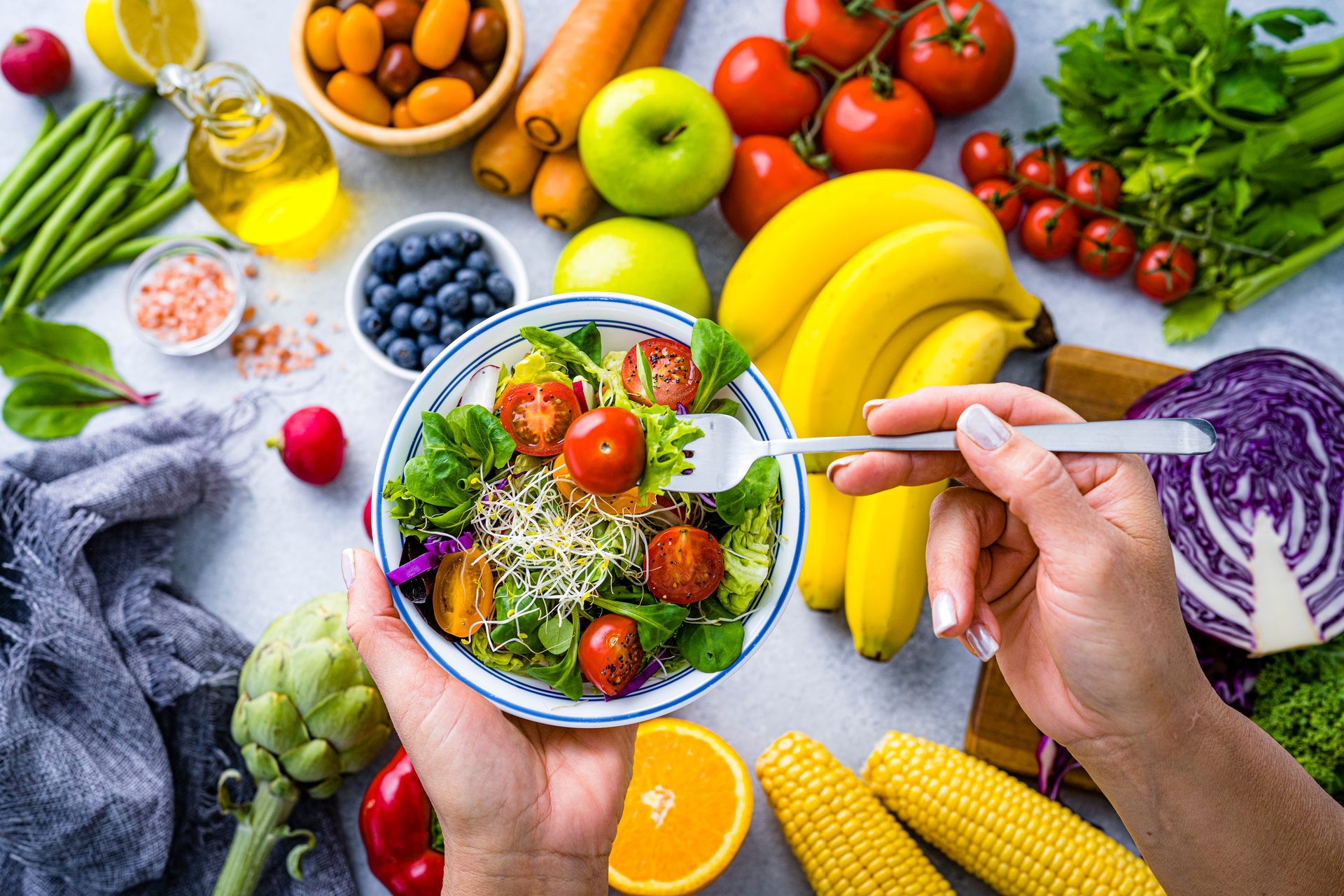
The study also reranked produce items based on risk rather than residue detection. The results bore little resemblance to traditional consumer rankings. Some foods that ranked highest for "contamination" (based on the number of detectable residues) demonstrated some of the lowest actual dietary risk, while others that were ranked lower showed comparatively higher, but still acceptable, exposures when toxicity was considered. This divergence highlights a key limitation of detection‑based guides: they do not account for toxicological potency or dose‑response relationships. From a food safety standpoint, ranking produce without reference to exposure thresholds can incorrectly signal that certain foods should be avoided altogether, potentially discouraging fruit and vegetable consumption, a well‑recognized public health concern (Figure 1).
FIGURE 1. Ranking produce without reference to exposure thresholds can potentially discourage fruit and vegetable consumption, a well‑recognized public health concern (Image credit: Getty Images / E+ / fcafotodigital)
Organic vs. Conventional: Expectations vs. Reality
Another common misconception addressed indirectly by Jacobs et al.1 is the dichotomous assumption that organic produce is pesticide‑free, while all conventional produce has detectable pesticide residues. Monitoring data show that organic foods may still contain detectable pesticide residues due to environmental persistence, contact with other items, or pesticide drift from adjacent farms. Regulatory standards already account for this reality by enforcing strict tolerance limits, regardless of production method. The presence of trace residues, whether on organic or conventional produce, does not inherently indicate a health concern. Risk is determined not by production label, but by toxicological relevance and exposure magnitude.
Implications for Food Safety Professionals
For food safety professionals, quality assurance leaders, and regulatory professionals, the implications of this work are as follows:
- Monitoring data should be interpreted through a risk lens, not a detection lens.
- Communication with consumers and stakeholders should distinguish between analytical detection and health relevance.
- Regulatory risk assessments remain a robust and protective framework for evaluating pesticide safety in the food supply.
The study also underscores the value of USDA PDP surveillance and EPA's established risk assessment infrastructure, reinforcing confidence that the U.S. food supply continues to meet stringent safety standards.
What This Study Does and Does Not Address
As a screening‑level analysis, Jacobs et al.1 focused on chronic dietary exposure to individual pesticides. The authors did not evaluate cumulative exposures from multiple pesticides across the entire diet or short‑term acute exposure scenarios in depth. The authors noted that future research could build upon these findings using whole‑diet models such as the U.S. Food and Drug Administration (FDA) Total Diet Study. Nevertheless, the large margins of safety observed provide reassurance that even when uncertainties are considered, pesticide residues in produce are unlikely to pose a meaningful risk to consumers.
Some recent publications and consumer‑facing analyses have attempted to move beyond simple residue concentrations by incorporating factors such as frequency of detection, measured concentration, and pesticide toxicity into composite scoring systems. While this approach is sometimes described as "risk‑based," it is important to distinguish such scoring frameworks from a formal human health risk assessment. Risk assessment evaluates whether exposure levels are sufficient to cause adverse health effects by explicitly comparing estimated intake with toxicologically derived, health‑based benchmarks and considering duration, life stage, and relevant uncertainty factors. In contrast, pesticide ranking or scoring systems, regardless of how many variables they include, typically stop short of linking dietary exposure to adverse health outcomes.
“Recent policy discussions have emphasized the importance of reducing children's exposure to potentially harmful chemicals, including pesticides.”
For example, a 2025 peer‑reviewed biomonitoring study by Temkin et al.3 examined associations between produce consumption patterns and urinary pesticide biomarkers. Although the analysis suggested modest correlations for certain foods, the overall relationships were weak or inconsistent across commodities, and the study did not evaluate health endpoints or assess whether observed biomarker levels approached thresholds of toxicological concern. The authors acknowledged substantial variability and uncertainty in translating residue measurements in food to internal exposure.
These findings underscore a key point for food safety professionals: detecting pesticide residues or even biomarkers of exposure does not, by itself, establish risk. Without contextualizing exposure magnitude relative to health‑protective benchmarks, such analyses may inadvertently blur the line between presence and harm.
Recent policy discussions have emphasized the importance of reducing children's exposure to potentially harmful chemicals, including pesticides. This focus reflects a broader public health goal shared by regulators and stakeholders: ensuring adequate oversight where exposures are higher, more frequent, or sustained.
Importantly, large‑scale federal monitoring consistently shows that pesticide residues in the U.S. food supply remain overwhelmingly within established safety limits. Data from the USDA PDP and FDA surveillance indicate that the vast majority of domestic and imported produce samples comply with U.S. EPA tolerance levels, often by substantial margins.
From a risk management standpoint, effective resource allocation requires prioritization. Exposures of greatest concern are those involving higher concentrations, repeated or prolonged contact, or occupational settings, particularly for pesticides with greater toxicological potency. By contrast, low‑level, episodic dietary exposures from residues in produce typically contribute minimally to overall risk.
Pesticides are designed to affect biological systems, so public caution is understandable. However, scientific risk assessment provides the necessary framework to distinguish meaningful risk from hypothetical concern. Maintaining public trust depends not only on vigilance and oversight, but also on clear communication about where risks are genuinely elevated and where safety margins are already robust.
Putting Risk Back into Food Safety Conversations
The key takeaway for food safety professionals is not that pesticide residues are absent, but that, when detected, their presence does not automatically translate into a health risk. Thus, risk-based evaluations are essential for distinguishing hypothetical concern from actual health impact.
As public demand for transparency grows, the challenge lies in clearly conveying that modern food safety decisions are grounded not in residue concentrations, but in science-based risk assessment that also considers factors such as intake, body weight, potency, and toxicological thresholds. Studies like this help recalibrate the conversation, ensuring that consumers receive context, not just detection numbers, when making informed dietary choices.
Acknowledgment
This work was supported in part by a grant from Dairy Management Inc. to Abby Snyder, Ph.D.
References
- Jacobs, N., D.G. Kougias, F. Louie, and B. Roberts. "A screening-level human health risk assessment of dietary intake of pesticide residues in produce as compared to consumer guide recommendations." Critical Reviews in Toxicology (April 16, 2024): https://doi.org/10.1080/10408444.2024.2316136.
- Environmental Working Group (EWG). "EWG's Shopper's Guide: The Dirty Dozen™." March 2026. https://www.ewg.org/foodnews/dirty-dozen.php.
- Temkin, A.M., V. Subramaniam, A. Friedman, et al. "A cumulative dietary pesticide exposure score based on produce consumption is associated with urinary pesticide biomarkers in a U.S. biomonitoring cohort." International Journal of Hygiene and Environmental Health 270 (September 2025): 114654. https://doi.org/10.1016/j.ijheh.2025.114654.
Andrey Massarsky, Ph.D. is a Senior Supervising Health Scientist. He has over 15 years of experience in the field of toxicology. At Stantec, he has been involved with safety, toxicology, and potential risks of chemicals to humans (e.g., chemicals on the California Proposition 65 list, PFAS, and microplastics), as well as ecological risk assessment (e.g., pesticides, PFAS). Dr. Massarsky has published more than 40 articles in peer-reviewed scientific journals on various aspects of ecotoxicology, neurotoxicology, environmental toxicology, and risk assessment.
Neva Jacobs, Dr.P.H., M.S.P.H., CIH is a Technical Fellow, Toxicology in Washington D.C. She is a board-certified industrial hygienist who holds additional certifications in risk assessment, exposure decision analysis, and HACCP plan development. Dr. Jacobs has characterized occupational and consumer exposures and risks throughout the supply chain, including those associated with pesticides and pesticide residues, flavorings, microbial contamination, leaching from packaging materials, and workplace ergonomic and noise hazards.
Ania Urban, Ph.D., M.P.H. is a Senior Supervising Health Scientist in San Francisco, California. She is a toxicologist with 15 years of professional experience in exposure assessment and human health risk assessment, with a focus on carcinogens. Dr. Urban has been involved with risk assessments related to exposures to chemical constituents in foods and beverages, contaminants or impurities in dietary supplements and pharmaceuticals, and risk assessments related to California's Proposition 65.