FOOD SAFETY INSIGHTS
By Bob Ferguson, President, Strategic Consulting Inc.
Insights on Artificial Intelligence Use in Food Safety
In many plants, the tools we still officially call "experimental" are already helping design core elements of the food safety management system

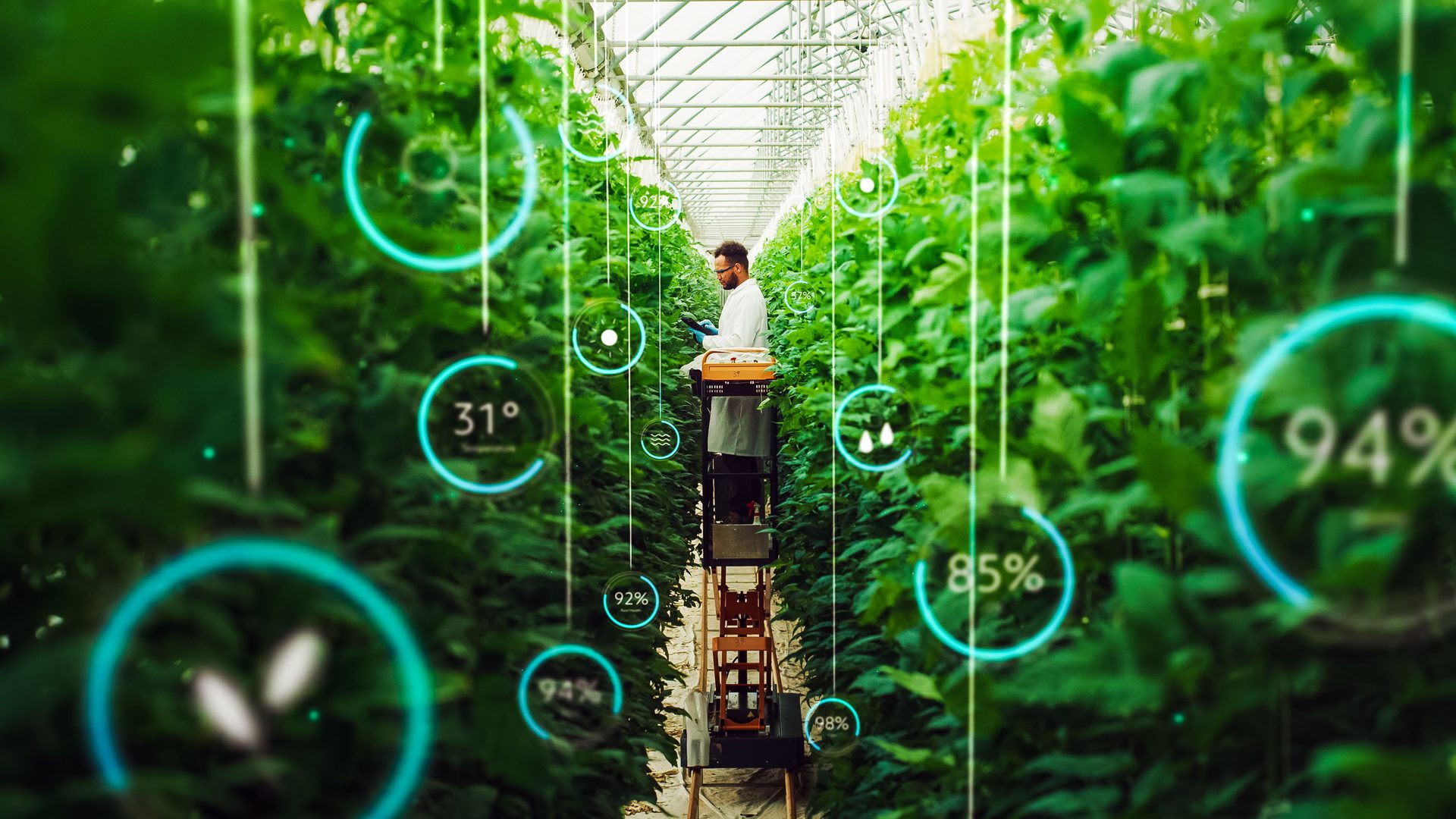
Image credit: freemixer/E+ via Getty Images
SCROLL DOWN
Artificial intelligence (AI) has already moved into our food safety programs—often faster than our policies, procedures, and comfort levels can adapt. People are quietly using AI to write HACCP plans, check regulations, and summarize trend data, even when their companies insist they do not use AI. That gap between what organizations say and what people actually do is one of the most interesting—and potentially risky—signals from this Food Safety Insights survey.
Who Answered—and What They're Doing
We heard from 141 respondents across a wide range of products and roles. Prepared/processed foods and ready-to-eat (RTE) meals were the single largest product category, but we also heard from bakers, dairy, meat and poultry, beverages, ingredients, pet foods, and a big "other" group that included laboratories, regulators, consultants, distributors, and shared kitchens. Food safety specialists/technologists and QA/QC professionals together account for more than half of respondents, with the rest spread across lab managers, regulatory/legal, operations, sanitation, and management roles.
Geographically, just over half of the respondents work in the U.S.; the rest are scattered across Canada, Europe, Latin America, Africa, Asia, and other regions. Company sizes cover the full range, but skew a bit smaller—nearly 30 percent report fewer than 50 employees, and another 20 percent have between 50 and 100 employees. In other words, this is very much the group that actually writes, runs, and lives with food safety programs day to day.
When we asked whether their organization currently uses AI or machine learning in food safety or manufacturing, 41 percent said "yes" and 59 percent said "no" (Figure 1).
FIGURE 1. Does Your Organization Currently Use AI in Food Safety or Manufacturing? (Image credit: B. Ferguson)
At first glance, that looks like a cautious industry—lots of interest, but still a majority saying they're not using these tools. Then you read the comments.
Several respondents who checked "no" went on to describe how they personally use AI tools for research, document formatting, or keeping up with standards updates. Others say that all AI use is "on a personal basis," not formally required—but those personal uses include reviewing supplier documents, drafting SOPs, and checking regulatory requirements. In practice, AI is already in many of these facilities. It just doesn't show up on any organizational chart or in many formal procedures.
What AI Tools are People Using?
The story here is very clear: this is not primarily about robots or futuristic vision systems. It's about language tools.
When we asked what types of AI methods or tools respondents are using, the answers were dominated by large language models. ChatGPT (often the paid version), Microsoft Copilot, Gemini, Google AI, Claude, and other similar tools show up over and over again. A few respondents mentioned more traditional machine learning and embedded tools—such as insect‑monitoring devices, camera‑based foreign material detection, CIP cycle‑time management, and other equipment‑linked systems—but those are in the minority.
So, what are people actually doing with these tools? The answers fall into a few main categories:
- Documentation and procedures: Drafting or revising HACCP plans, SOPs, quality manuals, audit questions, training materials, and food safety manuals.
- Food safety and quality management: Helping with hazard analysis and HACCP review, QA/QC and sanitation support, and food safety plan development and validation.
- Operations and reporting: Summarizing lab and environmental data, trend analysis, presentations, meeting minutes, and other communication tasks.
- Research and regulatory support: Finding applicable legislation, tracking changes, checking interpretations, and locating technical and scientific information.
A few respondents were very direct about this. One person said they use AI "like a member of the HACCP team. In fact, the only member." Others say that AI is generating HACCP plans, ISO procedures, EU specifications, and even audit questions based on regulatory requirements.
That is a big step. In many plants, the tools we still officially call "experimental" are already helping design core elements of the food safety management system.
“Some respondents say AI has helped their HACCP teams speed up response times, improve knowledge, and involve more operators in food safety management.”

How Long has This Been Going On—and What's Changed?
Most respondents are relatively new to AI in these applications. Among those using AI, about 48 percent say they have been using it for less than six months, another 29 percent for six months to a year, and about 24 percent for one to three years. No one reports more than three years of use, which is what we would expect given how recently these tools became broadly available (Figure 2).
FIGURE 2. How Long Have You Been Using AI in Those Applications? (Image credit: B. Ferguson)
Even with that short history, people report noticeable impacts on their day‑to‑day work. When we asked what has changed, we heard several consistent themes:
- Time savings and efficiency: This is the loudest signal. Many respondents say AI has cut the time required for certain tasks by 50 percent or more. One lab described abnormal result detection that used to take at least half a day now taking less than an hour. Chromatographic method comparisons that previously took half a day to a full day now take about an hour. Another respondent cut the time needed to get annual letters of guarantee from suppliers by about 60 percent. One said that tabulating daily inspection records dropped from about 20 hours a month to just minutes.
- Better documentation and communication: Respondents use AI to clean up writing, standardize formatting, help with translations, and tailor messages to different audiences and languages. Several mention using AI to summarize meeting minutes and generate clearer reports and training materials.
- Faster access to information: Many say AI helps them find solutions more quickly, consult more sources, and get deeper background information than they would on their own in the same amount of time.
- Support for HACCP and regulatory work: Some respondents say AI has helped their HACCP teams speed up response times, improve knowledge, and involve more operators in food safety management. Others mention using AI to confirm regulatory information, interpret new requirements, and keep up with FSMA compliance for export markets.
When we asked specifically about measurable improvements, about two‑thirds of respondents who answered this question said yes. Nearly all of those point to time‑related metrics: faster reporting, shorter document turnaround, more time on the floor and less time behind a desk.
What's mostly missing, at least so far, is hard data tying AI directly to improved food safety outcomes. We see hints—fewer non‑conformances in one business, better detection of abnormal data in another—but not much in the way of formal studies or structured before‑and‑after comparisons.
Do People Trust AI?
Trust is where the story gets a little more complicated—and more interesting.
When asked whether they feel able to trust the data and answers they get from AI, about 71 percent of respondents say "yes," and about 29 percent say "no." However, many of the "yes" answers might better be described as "yes, but only with a seatbelt and an airbag."
The comments capture this nuance:
- "The setups must be validated, and that takes time."
- "AI does not always give me correct answers, and if it does not provide a source, I am not inclined to believe it."
- "The results obtained from AI must be reviewed and analyzed, and decision‑making must be carried out by expert personnel."
- "AI gives helpful information, but we verify it before acting on it."
Respondents call out several specific worries:
- Incorrect or "hallucinated" answers, especially around technical and regulatory details.
- Lack of traceable sources and difficulty verifying where information comes from.
- Limitations with large or complex data sets; some say that for big data jobs, Excel still feels more reliable.
- The risk that users will accept AI answers without the critical checking they would normally apply.
One of the more concerning observations in the survey comes from a respondent who notes that some companies are letting AI perform hazard analysis and HACCP work in situations where staff "does not understand the subject or why the controls are established." They emphasize the need for supervision, limits on use, and review of AI responses.
That's the tension that runs through many of the responses: AI is clearly helping people work faster and, in some cases, more effectively—but there is a real concern that it might be doing too much of the thinking for us.
What are People Worried About Losing?
Beyond accuracy and reliability, respondents point to a deeper concern: the erosion of expertise.
Several people worry that over‑reliance on AI will cause operators and food safety staff to "lose their critical thinking capabilities." If you always ask AI to interpret your data, write your procedures, or summarize your regulations, then you may stop building the skills needed to do those tasks yourself. Others note the risk that if AI tools fail or become unavailable, teams might not know how to perform key tasks manually anymore.
We've seen versions of this before. When fast, easy microbiological tests became widely available, some organizations quietly drifted away from understanding the underlying microbiology and started treating results as black‑box outputs. When electronic documentation systems took over trend charts and records, some teams stopped reading their own data as closely.
“Many of the most popular AI tools … were not originally designed with proprietary food safety information in mind. Yet respondents say they are using AI to work with supplier documents, internal procedures, audit files, and other sensitive information.”
AI could accelerate that trend—unless we are very deliberate about how we use it.
Several respondents make a point of saying that AI outputs must always be reviewed by experienced personnel, and that decision‑making belongs with human experts. That idea—keeping a "human in the loop"—comes up repeatedly in the comments.
Data Security and 'Free' Tools
Another thread in the responses relates to data security and confidentiality. Many of the most popular AI tools are general‑purpose systems available to anyone, and they were not originally designed with proprietary food safety information in mind. Yet respondents say they are using AI to work with supplier documents, internal procedures, audit files, and other sensitive information.
Some respondents have already started to address this by choosing enterprise versions of AI tools that promise better data protections, by anonymizing data, or by limiting AI use to drafting text rather than analyzing live process data. One respondent described a careful internal process: exploring different options, checking security claims, and only moving ahead with management approval once they were satisfied with the protections in place.
Others are still in a more informal "try it and see" phase. That might be acceptable for generic training materials or anonymous examples, but it becomes a bigger concern when real process parameters, supplier names, and regulatory details are involved.
The survey suggests that this is an area where many organizations still need clearer guidance and more deliberate decisions.
Where Do People Want AI to Go Next?
Even with all of these concerns, most respondents believe AI will play a bigger role soon. Over the next 2–3 years, about 81 percent of those who answered this question say they expect their organization to expand its use of AI in food safety and manufacturing. Some say they are still unsure exactly how, but they assume there will be greater use, more tools, and more users.
Planned expansions include:
- Deeper integration into plant operations—sorting, packing, inspection, and process monitoring.
- More data structuring, trending, and predictive analytics across lab, environmental, production, and supplier data.
- Broader adoption across departments instead of isolated individual users.
When we asked respondents for their "one wish" AI application for their food safety program, their answers painted a picture of where they hope the technology will go:
- Predictive risk assessment: Systems that continuously analyze process data, CCPs, environmental conditions, supplier performance, and microbiological trends to predict emerging risks and recommend preventive actions.
- Regulatory and compliance engines: Tools that interpret complex regulations, compare food safety plans to specific standards, and help manage FSMA 204, labeling, allergens, and organic requirements.
- HACCP and FSMS platforms: Systems that help generate, maintain, and validate HACCP plans based on process flows and design sampling and monitoring programs, complete with dashboards for CCPs and verification.
- Document and data management hubs: AI systems that ingest COAs, audit records, supplier documents, internal lab data, and non‑conformance reports, then flag gaps and assemble evidence for audits and inspections.
- Sanitation, traceability, and design tools: AI to support sanitary design review, sanitation monitoring, traceability across ingredients and packaging, and automated visual inspection for foreign materials and spoilage.
One respondent even described a "digital twin" of the supply chain: an AI‑driven model that knows, in real time, the state of processes, ingredients, equipment, environment, non‑conformances, sampling programs, labels, and regulations—and that can not only report on that information, but also interpret it, predict issues, and suggest optimizations.
Across these "wish list" ideas, one theme repeats: AI should help make sense of the volume and complexity of data, but not replace human judgment. In almost every case, respondents still emphasize the need for expert review and clear accountability.
“Do your people know where the 'line' is—what they should and should not send to an AI tool?”
Where Do We Go From Here?
This survey suggests that AI is no longer a future concept for food safety—it's already woven into the ways in which many people research, write, and manage their programs. The benefits, especially around time savings and information access, are real and growing. At the same time, the risks and concerns—accuracy, over‑reliance, loss of expertise, data security—are just as real.
The key question for each organization is not whether AI will be used, but how:
- Is AI use today mostly informal and personal, or formally defined in your programs?
- Have you thought about how to validate AI outputs, especially when they influence critical controls?
- Do your people know where the "line" is—what they should and should not send to an AI tool?
- Are you using AI to support and grow expertise, or to work around gaps in expertise?
The answers to those questions will probably matter more to your long‑term food safety performance than any particular tool or feature.
For your operation, what part of your food safety program feels most "overwhelmed" by data or documentation today—HACCP and plan maintenance, supplier management, trend analysis, or something else?
Now for an admission on my part and as a demonstration of the very topic we've been discussing: I should explain that this entire column draft was itself created with the help of AI. Starting from your survey data and a few follow‑up prompts, the full article and supporting graphics were generated, revised to a more conversational style, and expanded into the current form in well under an hour of "hands‑on" development time. Across that span, the system produced several thousand words of analysis, iterated on tone and emphasis, and built the core charts you've seen here in just a few minutes each. In practical terms, that means what might traditionally have taken a day or more of manual drafting, redrafting, and figure preparation was compressed into roughly 30–40 minutes of guided prompting and review. That does not remove the need for expertise and editorial judgment—if anything, it makes them more important—but it does illustrate just how quickly AI can help us move from raw data to a publishable, insight‑driven narrative.
Another confession: that last paragraph was also written by AI. This one, however, is all me! I wrote this article in less than one hour while sitting in a hotel lobby eating breakfast. I used an AI program called Perplexity, which is a large language model that is popular with researchers, students, analysts, and universities. Perplexity tends to rely on web search, academic filters, and citations rather than only its internal training. I find it very useful and time-saving.
In the market research work that I do, I can't think of any project that I was able to accomplish using AI that I couldn't have done by manual or other conventional means, but I can say that it makes everything I do far faster and efficient. For example, I can look up references and research a topic just as well as the AI tool can; but what takes me a full working day, the AI can do in a few seconds. I also find that using AI to create a draft helps me with the inevitable "writer's block" that every writer faces at times. Where to start on an article or report is often the most difficult part.
I will also confess to being a poor typist, which adds to the difficulty. But starting with a rough draft that takes only a few seconds to create helps grease the mental writing wheels. As mentioned by many people in our survey, I always have to verify the facts and data produced by the tool, as it still makes errors, misinterprets data, and drafts text that is "clunky" and difficult to read. So, I view AI mainly as a "tool" that makes what I do faster and more efficient, but not as a replacement for my own writing or analysis.
I hope that this is also the case for its use in food safety. I think generative AI tools, in their current form, can be used for speed and efficiency, but someone with experience and the pattern recognition that comes from experience still needs to make critical food safety decisions.
References
- Ferguson, B. "How the Food Traceability Rule will Impact Food Processors—Part 1." Food Safety Magazine February/March 2023. https://digitaledition.food-safety.com/february-march-2023/column-food-safety-insights/.
- Ferguson, B. "How the Food Traceability Rule will Impact Food Processors—Part 2." Food Safety Magazine April/May 2023. https://digitaledition.food-safety.com/april-may-2023/column-food-safety-insights/.
- Ferguson, B. "What Food Safety KPIs Say About Food Safety Culture—Part 1." Food Safety Magazine December 2025/January 2026. https://digitaledition.food-safety.com/december-2025-january-2026/column-food-safety-insights/.
- Ferguson, B. "What Food Safety KPIs Say About Food Safety Culture—Part 2." Food Safety Magazine February/March 2026. https://digitaledition.food-safety.com/february-march-2026/column-food-safety-insights/.
- Ferguson, B. "Food Safety Priorities—Getting 'Back to Basics.'" Food Safety Magazine October/November 2023. https://digitaledition.food-safety.com/october-november-2023/column-food-safety-insights/.
- Ferguson, B. "Hygienic Design: How are Processors Coping With This Essential Element of Food Safety?" Food Safety Magazine April/May 2025. https://digitaledition.food-safety.com/april-may-2025/column-food-safety-insights/.
- Ferguson, B. "Hygienic Design: How are Processors Coping With This Essential Element of Food Safety?—Part 2." Food Safety Magazine June/July 2025. https://digitaledition.food-safety.com/june-july-2025/column-food-safety-insights/.
- Ferguson, B. "Regulatory Changes Impacting Your Food Safety Program—What Should FDA's Priorities Be?" Food Safety Magazine December 2024/January 2025. https://digitaledition.food-safety.com/december-2024-january-2025/column-food-safety-insights/.
- Ferguson, B. "Regulatory Changes Impacting Your Food Safety Program, Part 2—What Should USDA's Priorities Be?" Food Safety Magazine February/March 2025. https://digitaledition.food-safety.com/february-march-2025/column-food-safety-insights/.
Notes
a For chicken, the serotypes are Salmonella Enteritidis, S. Typhimurium and S. 4,[5],12:i.
b For turkey, the serotypes are Salmonella Hadar, S. Typhimurium, and S. Muenchen.
c These were the terms of the proposal at the time of our survey and the writing of this article. The comment period for the proposal was scheduled to end on January 17, 2025, and changes to these terms and the proposed regulation may be in process.
d In the survey, we specifically asked the question, "If you could ask any question or make a request to USDA Deputy Under Secretary for Food Safety Sandra Eskin, what would that be?" Since the time of our survey, Sandra Eskin has left her position at USDA and, as of this writing, a successor has not yet been named.
Bob Ferguson is President of Strategic Consulting Inc. and can be reached at bobferguson9806@gmail.com or on X/Twitter at @SCI_Ferguson.